
Industrial processes that handle mixtures of liquids and solid particles require pumping equipment capable of managing demanding conditions. Abrasive particles can cause rapid wear, while dense slurry can increase the power and pressure needed for transportation.
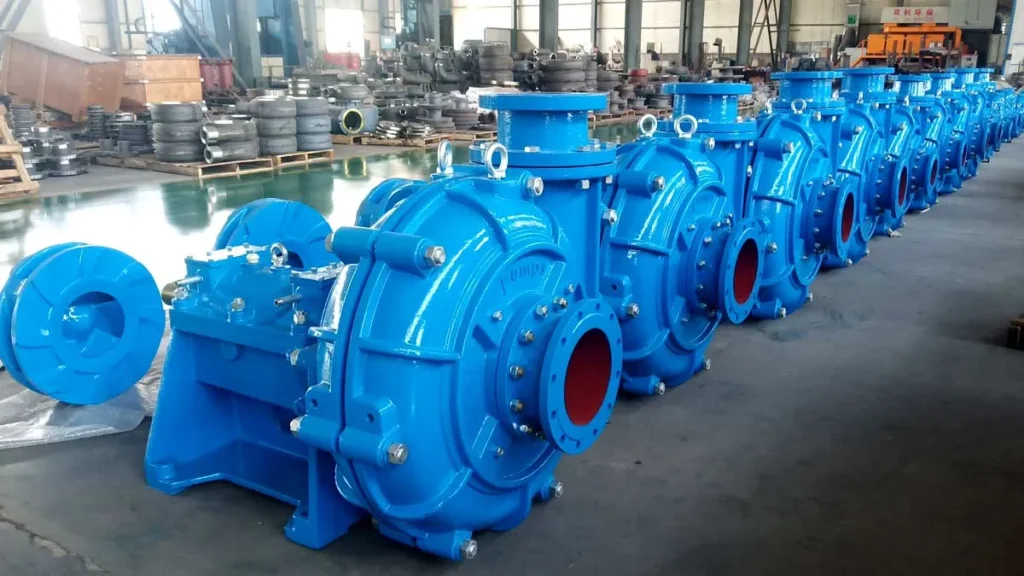
A centrifugal slurry pump is designed specifically for these applications. By combining centrifugal pumping principles with heavy-duty construction, it can provide reliable slurry transportation across mining, mineral processing, dredging, and other industries.
What Makes Centrifugal Slurry Pumps Different?
A conventional centrifugal pump is generally designed for relatively clean liquids. A slurry pump, in contrast, is built to handle suspended solids that may be abrasive, dense, or corrosive.
Its internal components are selected and arranged to withstand challenging operating conditions. This makes the equipment suitable for applications where standard pumping equipment may experience excessive wear or reduced performance.
Key Benefits of Centrifugal Slurry Pumps
1. Effective Handling of Abrasive Solids
One of the primary advantages is the ability to transport abrasive particles. Materials such as sand, ore, mineral concentrates, and tailings can cause significant erosion in ordinary pumps.
Slurry pumps use robust hydraulic components and wear-resistant materials to reduce the effects of continuous particle contact. The specific construction can be selected according to the hardness and concentration of the solids.
2. Reliable Continuous Operation
Many industrial processes require slurry to be transported continuously for extended periods. A properly selected pump can maintain steady flow under demanding operating conditions.
Heavy-duty components and appropriate wear protection help support reliable operation, particularly when the pump is correctly sized for the system.
3. Suitable for High-Solids Slurries
Slurry concentration can vary considerably between applications. Some processes involve relatively dilute mixtures, while others contain a substantial percentage of solid material.
Centrifugal slurry pumps are designed to accommodate these conditions more effectively than equipment intended only for clean liquids. The appropriate pump configuration depends on slurry density, particle size, and required flow.
4. Strong Resistance to Wear
Abrasive slurry gradually wears surfaces exposed to the moving mixture. Wear-resistant liners and other replaceable components can help protect the main pump structure.
Using replaceable wear parts also makes maintenance more practical. Components exposed to the greatest amount of abrasion can be inspected and replaced without necessarily replacing the entire pump.
5. Flexible Application Options
Different slurry pumping systems have different installation and operating requirements. Horizontal, vertical, and other configurations are available for various applications.
This flexibility allows pump selection to take into account factors such as available space, suction conditions, sump depth, pipeline arrangement, and required pumping capacity.
6. Efficient Slurry Transportation
A properly selected centrifugal pump can move substantial volumes of slurry through pipelines. Its rotating impeller transfers energy to the mixture, generating the pressure needed to overcome system resistance.
Efficiency depends on factors such as pump size, operating speed, slurry properties, and pipeline design. Correct sizing is therefore essential for achieving practical energy performance.
7. Adaptability to Different Industries
Centrifugal slurry pumps are used in many industries because solid-liquid mixtures occur in a wide range of processes. Common applications include:
- Mining and mineral processing
- Tailings transportation
- Sand and gravel handling
- Coal preparation
- Dredging
- Construction
- Ash handling
- Industrial processing
Each application requires consideration of the specific slurry characteristics and operating conditions.
Benefits of Replaceable Wear Components
Wear is unavoidable when pumping abrasive materials, but it can be managed through suitable component design. Replaceable liners, impellers, and other wear parts allow maintenance teams to restore critical surfaces as they deteriorate.
This can help reduce downtime and make maintenance planning more predictable. The replacement interval depends heavily on slurry concentration, particle characteristics, pump speed, and operating hours.
How Proper Selection Improves Performance
The benefits of a slurry pump depend on selecting equipment that matches the actual application. Important factors include flow rate, total head, slurry density, solids concentration, particle size, and material hardness.
Chemical properties should also be considered when the slurry may cause corrosion. Selecting suitable materials for both abrasive and corrosive conditions can help prevent premature component failure.
Maintenance Still Matters
Even a heavy-duty slurry pump requires regular inspection and maintenance. Operators should monitor important indicators such as vibration, pressure, flow, bearing temperature, leakage, and unusual noise.
Wear components should be inspected according to the severity of the application. Addressing excessive wear early can help maintain hydraulic performance and reduce the risk of unexpected shutdowns.
Conclusion
The key benefits of using a centrifugal slurry pump include effective handling of abrasive solids, reliable operation, resistance to wear, flexibility, and the ability to transport high-solids mixtures. These characteristics make slurry pumps suitable for many demanding industrial processes.
However, performance depends on more than pump construction alone. Correct sizing, suitable materials, appropriate operating conditions, and regular maintenance all contribute to efficient and dependable slurry transportation.