
Quality testing is an important part of producing reliable water-soluble packaging materials. Because film performance can affect packaging strength, dissolution, storage stability, and production efficiency, manufacturers need consistent methods for evaluating material properties.
From physical strength to dissolution behavior, PVA Water Soluble Film can be evaluated through several testing procedures. POLYVA recognizes that application-specific testing helps manufacturers determine whether a particular film specification is suitable for its intended packaging conditions.
Why Quality Testing Is Important
Water-soluble film must perform reliably throughout its expected lifecycle. It needs to withstand manufacturing, filling, transportation, storage, and handling before dissolving under its intended conditions.
Testing helps identify variations in film properties before they affect finished packaging. It also provides measurable information that can support quality control and product consistency.
Thickness Measurement
Film thickness is one of the basic properties checked during quality inspection. Consistent thickness can contribute to predictable mechanical strength, sealing behavior, and dissolution characteristics.
Measurements can be taken at multiple locations across a film sample. Comparing results helps identify uneven areas or variations that could influence packaging performance.
Tensile Strength Testing
Tensile testing evaluates how much force the film can withstand before breaking. This is particularly relevant for packages that need to tolerate handling, transportation, and automated packaging processes.
Testing typically examines properties such as tensile strength and elongation. These measurements help determine how the film behaves when stretched or subjected to mechanical stress.
Tear Resistance Evaluation
A film may have adequate tensile strength but still require evaluation of its resistance to tearing. Tear testing provides additional information about how the material behaves when a small defect or stress concentration occurs.
This can be useful for applications involving automated cutting, pouch formation, transportation, or repeated handling.
Dissolution Testing
Dissolution performance is a defining characteristic of water-soluble film. Testing can determine how quickly and consistently a sample dissolves under specified water conditions.
Important variables may include:
- Water temperature
- Water volume
- Agitation level
- Film thickness
- Sample size
- Water quality
Using consistent test conditions makes results easier to compare between different film batches or specifications.
Water Solubility Assessment
Dissolution time and overall solubility are related but can provide different information. A quality assessment may examine whether the film completely disperses or dissolves under the conditions required by the intended application.
Testing should reflect the environment in which the finished package is expected to encounter water.
Seal Strength Testing
For pouch-based packaging, the quality of the seal is just as important as the film itself. Weak or inconsistent seals can lead to leakage, package failure, or product loss.
Seal strength testing measures the force required to separate a sealed area. It can help determine whether sealing parameters are appropriate for the selected film.
Heat-Sealing Performance
Water-soluble film may need to operate within a specific sealing temperature and pressure range. Testing can help identify suitable sealing conditions for a particular film grade.
The evaluation may consider sealing temperature, dwell time, pressure, and production speed. These factors can affect both seal integrity and manufacturing efficiency.
Moisture Resistance Testing
Although the film is designed to dissolve in water, it still needs appropriate stability during storage and handling. Excessive humidity can affect physical properties and processing performance.
Moisture-related testing can help evaluate how the film responds to controlled humidity conditions. This information can support recommendations for storage and packaging procedures.
Dimensional Stability Testing
Film dimensions can change when exposed to environmental conditions such as humidity and temperature. Dimensional stability testing examines whether the material maintains its intended size and shape.
This is particularly relevant for automated packaging equipment, where consistent film dimensions can help maintain accurate forming and sealing.
Chemical Compatibility Testing
Some packaged formulations may interact with the film during storage. Cleaning chemicals, agricultural formulations, and industrial products can have different effects on water-soluble materials.
Compatibility testing involves exposing film samples to the intended formulation under controlled conditions. Changes in appearance, strength, flexibility, or surface condition can then be evaluated.
Surface and Appearance Inspection
Visual inspection is a simple but valuable part of quality control. Operators can examine film for visible defects such as:
- Holes or pinholes
- Scratches
- Wrinkles
- Uneven surfaces
- Foreign particles
- Discoloration
- Edge damage
Automated inspection systems may also be used where high-volume production requires continuous monitoring.
Optical Property Testing
For applications where appearance matters, optical characteristics can also be evaluated. Transparency, haze, and surface uniformity may influence the visual quality of the finished package.
These properties can be measured using appropriate laboratory instruments rather than relying only on visual inspection.
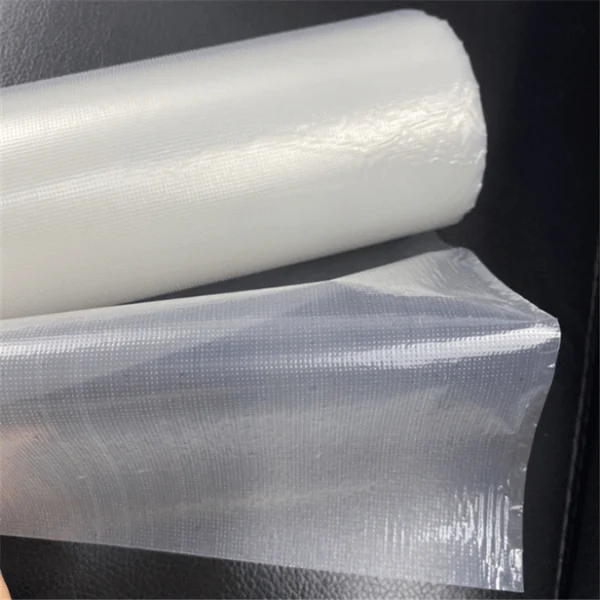
Roll and Winding Quality
Film quality is not limited to the material itself. The way film is wound into rolls can also affect production performance.
Quality checks may examine roll alignment, edge condition, winding tension, and visible damage. Properly prepared rolls can reduce feeding and handling problems during packaging.
Print Quality Testing
When information or identification is printed on water-soluble film, the printed surface may require additional evaluation. Testing can assess print clarity, adhesion, consistency, and resistance to handling.
The printing process should be compatible with the film and the requirements of the finished package.
Batch-to-Batch Consistency
Testing individual samples is useful, but maintaining consistency between production batches is equally important. Manufacturers can compare test results across batches to identify variations over time.
Documented quality records can help establish acceptable ranges for key properties and support traceability when questions arise.
Application-Specific Testing
Not every application requires exactly the same testing program. A film designed for small unit-dose packages may have different priorities from film used for larger industrial packaging.
Application-specific testing may focus on the properties that have the greatest impact on final performance, helping manufacturers avoid unnecessary testing while maintaining appropriate quality standards.
Role of Quality Control Documentation
Test results become more useful when they are properly documented. Records can include material batch numbers, test conditions, measured values, equipment information, and inspection dates.
Consistent documentation makes it easier to compare results, investigate deviations, and maintain repeatable production processes.
Conclusion
Quality testing provides a structured way to evaluate the physical, chemical, and functional properties of water-soluble film. Thickness, tensile strength, tear resistance, dissolution, sealing, moisture response, chemical compatibility, and visual quality can all contribute to the overall performance of the finished material.
By combining standardized laboratory testing with application-specific evaluations and production inspections, manufacturers can maintain more consistent film quality and select specifications that meet their packaging requirements.