

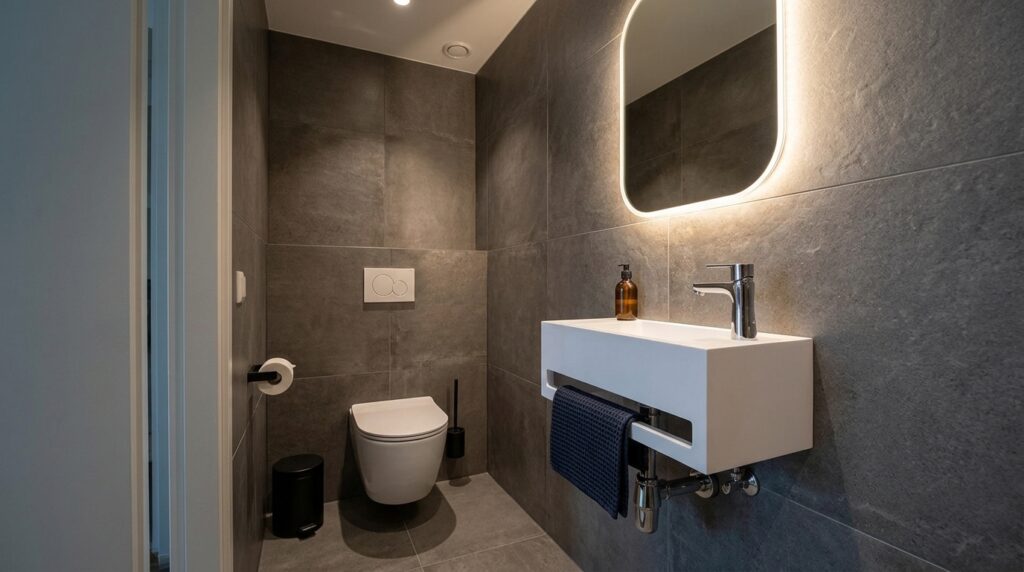
Selecting a basin for a bathroom project may seem straightforward, but a product that looks suitable online can present difficulties once it reaches the installation stage. Dimensions, plumbing connections, mounting requirements, and the intended use all influence whether it will work in the finished room. These details are particularly important when space is restricted, because there may be little opportunity to reposition the fixture after other work has been completed.
Before purchasing a small basin for bathroom projects, establish the installation conditions and compare them with the product’s technical specifications. This simple step can help prevent problems involving incompatible taps, insufficient clearance, unsuitable support, or a bowl that is too small for normal use. A considered purchase should account for the entire basin area rather than the fixture alone.
Establish the project requirements
Begin by identifying where the basin will be installed and who will use it. A guest washroom may need a straightforward handwashing fixture, while a main bathroom may require a more generous bowl and nearby storage. A commercial or shared facility may have additional requirements relating to durability, accessibility, cleaning, and local regulations.
Write down the essential requirements before comparing designs. These might include a maximum projection, preferred mounting style, material, tap arrangement, color, and budget. Having clear priorities makes it easier to distinguish necessary features from optional design details.
Verify the available dimensions
Measure the intended installation area rather than relying on general estimates. Record the width of the wall or countertop, the distance to adjacent fixtures, and the available projection from the wall. Include the movement of doors, drawers, shower screens, and cabinet fronts.
Compare these measurements with the basin’s complete product dimensions. Pay attention to the rim, bowl, tap deck, and any supporting structure. A model described as compact may still require more space than expected once its fittings are included.
Understand the mounting method
Different basin types require different installation conditions. Wall-mounted models need suitable fixings and adequate structural support. Countertop basins require a stable surface with the correct opening and enough surrounding space. Pedestal or semi-pedestal designs may conceal pipework but occupy additional floor area.
Ask the supplier for installation drawings and fixing details. If the wall construction is uncertain, have it checked before ordering. A basin should never be mounted using improvised supports or fixings that are not appropriate for its weight and design.
Check tap and waste compatibility
A basin’s tap-hole arrangement determines which fittings can be used. Some models have one tap hole, others have separate holes, and some are designed for wall-mounted taps. The chosen spout must reach the bowl appropriately, while the handle should remain accessible.
Drainage compatibility is equally important. Confirm the waste outlet size, overflow arrangement, and trap clearance. If the existing pipework is fixed, a basin with compatible outlet positioning may reduce plumbing changes. Where alterations are necessary, include the work in the project budget.
Compare materials and care requirements
Consider the material in relation to the expected level of use. Ceramic and glazed vitreous china are familiar choices for residential bathrooms, while solid-surface products may offer different shapes and finish options. Other materials can provide a distinctive appearance but may need specific maintenance.
Review the manufacturer’s cleaning instructions and ask about resistance to common bathroom products. Look for a smooth, consistent finish and check product samples where possible. Do not assume that all finishes tolerate abrasive cleaners or strong chemicals.
Review the supplier’s documentation
A useful product listing should provide more than attractive photographs. Look for exact dimensions, material details, installation guidance, care instructions, and information about included components. Warranty conditions should be clear, including what is covered and any installation requirements that affect coverage.
For a larger project, ask about delivery packaging, lead times, replacement parts, and the process for reporting transport damage. If multiple basins are required, confirm that the units will have consistent dimensions and finishes.
Include the full cost in the budget
The purchase price is only one part of the overall cost. Taps, waste fittings, traps, mounting hardware, cabinetry, plumbing alterations, and professional installation may all be additional expenses. A less expensive basin can become a costly choice if it requires substantial changes to the existing services.
Compare complete installed costs where possible. This provides a more realistic basis for evaluating different models and helps avoid unexpected spending during construction.
Make the decision before finishing work begins
The basin should be selected early enough for the plumber, builder, and installer to coordinate pipe positions, wall reinforcement, countertop openings, and finished heights. Confirm the final product specifications before these details are fixed.
A successful purchase starts with preparation
The right compact basin is one that suits the room, matches the plumbing, meets the project’s practical needs, and comes with clear installation information. By checking these points before ordering, buyers can reduce avoidable delays and achieve a more reliable finished bathroom.