

Yolanda ended up in an emergency room eighteen months ago after a standard-dose prescription triggered a severe reaction nobody had warned her about. The dose was correct by every guideline her doctor had access to at the time. What nobody checked was how her specific genetic makeup processed that particular drug, information that existed in principle but wasn’t part of the workflow that wrote her prescription. This year, a new provider flagged that same gene-drug interaction automatically before a different medication ever reached the pharmacy, using a system built around exactly the kind of personal data her original prescription never touched.
That shift, from a guideline built for an average patient to a recommendation built around Yolanda’s actual biology, is exactly what’s pushing a Healthcare App Development company to build tools fundamentally different from the chronic-disease trackers and scheduling apps that defined the last decade of digital health. Personalized medicine has moved from a research concept into real clinical workflows this year, and the global market behind it is already valued north of $200 billion and growing fast. The apps making that shift usable for an actual patient, rather than just a research lab, are where the real engineering challenge sits right now.
One-Size-Fits-All Prescribing Was Always a Guess
Traditional medicine has operated for generations on population averages: a standard dose works for most people, so it becomes the standard dose for everyone, with the exceptions discovered only after something goes wrong. That model made sense when there was no practical way to account for individual variation at scale. It also meant a meaningful share of adverse drug reactions, like the one Yolanda experienced, were essentially unavoidable under the old system, not because the information to prevent them didn’t exist anywhere, but because connecting a specific patient’s genetics to a specific prescription decision wasn’t built into how care actually got delivered.
Pharmacogenomics Turned a Guess Into a Known Risk Factor
Pharmacogenomics, the study of how a person’s genes affect their response to specific medications, has moved out of specialized research settings and into electronic health records at a growing number of health systems. Adding pharmacogenetic data directly into a patient’s record lets a system generate a real-time alert when a clinician is about to prescribe a medication that patient’s specific genetic profile processes poorly, catching a risk before a prescription is written rather than after a reaction sends someone to the emergency room. That’s a meaningfully different kind of personalization than adjusting a workout plan or a meal recommendation. It’s personalization applied to a decision that can genuinely be the difference between a medication working as intended and a medical emergency.
AI Is Combining Genetic Data With Everything Else About a Patient
The more ambitious version of this shift goes beyond a single gene-drug interaction check into something researchers describe as multi-omics, combining genomic data with a patient’s electronic health record, lifestyle factors, and other biological markers into one integrated picture rather than treating each data source separately. AI models trained to process that combined dataset can flag disease risk and predict treatment response with a level of specificity that a single data source never achieves on its own. Major health systems have already begun partnering with AI infrastructure companies specifically to decode patient genomic data at scale, aiming to predict disease risk and individual therapy response well before symptoms would otherwise prompt a diagnosis.
Oncology Is Where This Is Furthest Along
Cancer care has become the clearest proving ground for this entire shift, largely because the stakes and the data infrastructure already pointed in that direction. Platforms now analyze genomic biomarkers directly from routine clinical tissue slides to help oncologists select a therapy matched to the specific genetic profile of a patient’s tumor, rather than defaulting to a standard treatment protocol built around average outcomes across a broad patient population. Liquid biopsy tests, analyzing a blood sample rather than requiring invasive tissue sampling, are shortening the diagnostic journey considerably for patients with rare or hard-to-diagnose conditions, turning what used to be a monthslong diagnostic process into something measured in weeks.
Wearables Closed the Loop Between Genetic Risk and Daily Monitoring
A genetic risk profile or a biomarker result used to sit static in a chart, checked once and rarely revisited unless a new issue prompted another look. Combining that genomic data with continuous monitoring from a wearable device changes the picture from a single snapshot into an ongoing feedback loop. A physician can adjust a treatment plan based on a patient’s actual, current health status alongside their known genetic predispositions, rather than relying solely on how a patient reports feeling at an appointment scheduled months in advance. For a patient managing a condition where early intervention matters considerably, that shift from periodic snapshots to continuous, genetically-informed monitoring is a meaningfully different standard of care.
Why Patient Apps Are the Actual Delivery Mechanism for All of This
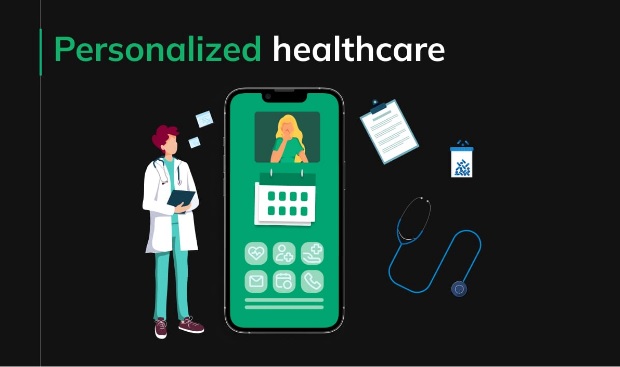
None of this sophisticated backend technology matters to a patient unless there’s a usable way to actually interact with it, and that’s increasingly where patient-facing apps come in. Rather than genomic results, wearable data, and medical records living in three separate systems a patient has to track down individually, newer platforms are built specifically to aggregate a patient’s health data into a single accessible location. That consolidation matters enormously for a patient managing a complex condition across several specialists, since a fragmented picture of someone’s own health data is exactly the kind of gap that let Yolanda’s original prescription slip through without the genetic context that would have flagged it.
The Real Ethical and Privacy Stakes Are Higher Here
Genetic data carries a different weight than a typical health record, since it reveals information not just about one patient but about their biological relatives, and it can’t be changed the way a password or even a diagnosis can be managed over time. The ethical questions raised by AI-driven personalized medicine, who can access genomic data, how long it’s retained, what happens if an insurer or employer ever gained access, are considerably higher stakes than the privacy concerns attached to a standard fitness or scheduling app. A development team building in this space has to treat genomic data protection as a foundational architectural decision rather than a compliance checkbox addressed near launch, because the consequences of a breach in this category extend well beyond the individual patient whose data was exposed.
What Actually Drives the Price of Building One of These
A basic patient app aggregating existing medical records and appointment data sits at the more modest end of what a build like this costs, while a platform integrating genomic data, AI-driven treatment matching, and continuous wearable monitoring into one coherent experience runs considerably higher. Healthcare App Development Cost in this category scales mostly with how many distinct, sensitive data sources the app has to securely connect and interpret together, a genomic lab, an EHR, a wearable API, rather than with how the interface itself looks on screen. Security and compliance infrastructure capable of handling genetic data specifically, beyond standard HIPAA requirements, adds a real and necessary cost layer that a general wellness app never has to account for.
Who Actually Has Access to This Right Now
It’s worth being honest about where personalized medicine stands today rather than where the research promises it’s heading. Pharmacogenomic testing and multi-omics-informed treatment remain concentrated at major academic medical centers and large health systems with the infrastructure, specialist staff, and research partnerships to support them, while a community clinic or a rural hospital often has none of that available to patients walking through the door. That gap matters enormously for equitable access, since the patients most likely to benefit from genetically-informed prescribing, people managing complex or multiple conditions, don’t uniformly have access to the systems that would catch Yolanda’s kind of risk before a reaction happens. The apps and platforms making this technology usable at a smaller clinic, rather than only at a handful of flagship research hospitals, represent a meaningful part of actually closing that gap rather than letting personalized medicine remain a benefit reserved for whoever happens to live near the right hospital.
Insurance and Reimbursement Are Still Catching Up
A genomic test or an AI-driven treatment-matching platform does a patient little good if insurance won’t cover it, and reimbursement policy has moved more slowly than the underlying technology in this category. Coverage for pharmacogenomic testing varies considerably between insurers and often depends on a specific diagnosis or medication class rather than being available as a standard preventive measure, which means two patients with identical genetic risk factors can have very different actual access depending on their coverage. This mismatch between what the technology can already do and what a patient’s insurance will actually pay for is one of the quieter but more consequential barriers slowing broader adoption, and it’s a factor any healthcare app in this space has to account for, since a feature a patient can’t actually afford to use doesn’t meaningfully improve their access to care regardless of how sophisticated the underlying science is.
What Changed for Yolanda
Yolanda’s new provider never had to ask her to remember or research her own genetic risk factors before writing a prescription. The system already knew, flagged the interaction automatically, and routed her to an alternative medication before anything reached the pharmacy. Nothing about that process required her to become her own advocate for information that used to live out of reach of the actual decision being made about her care. That’s the real shift running through personalized healthcare right now, not a flashier app for its own sake, but medicine finally accounting for the fact that no two patients, and no two prescriptions, were ever actually the same.