

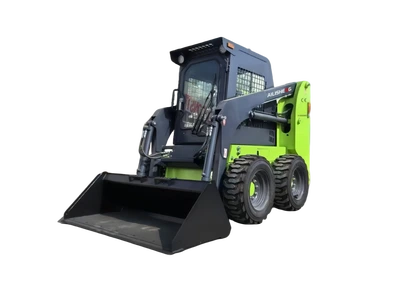
Battery technology is one of the most important factors shaping the future of electric construction equipment. As contractors look for cleaner, quieter, and more cost-efficient machinery, electric skid steer loaders are becoming an increasingly practical option for construction sites, warehouses, agricultural operations, and indoor demolition projects. Improvements in battery capacity, charging speed, energy efficiency, and thermal management are helping these machines handle more demanding tasks while reducing downtime.
For buyers, understanding these developments makes it easier to evaluate equipment based on real-world performance rather than marketing claims. Choosing an experienced Electric Skid Steer Loaders Manufacturer can help businesses identify machines with suitable battery systems, reliable power delivery, and practical charging solutions for their daily operations. The right combination of battery technology and machine design can influence productivity, operating costs, and long-term equipment value.
1. Developing Higher-Capacity Battery Systems
One major area of advancement is battery capacity. Electric skid steer loaders rely on rechargeable battery packs to power their drive systems, hydraulic functions, and electronic controls. A battery with sufficient usable capacity allows operators to complete more work between charging sessions.
Manufacturers are improving battery-pack design to make better use of available space while maintaining the machine’s required balance, stability, and weight distribution. Higher energy density can also help increase operating time without requiring an excessively large battery pack.
However, a larger battery does not automatically guarantee better performance. Buyers should consider the relationship between battery capacity, machine power requirements, workload, and charging opportunities. A loader used for intermittent material handling may need a different battery configuration from one operating continuously in a demanding construction environment.
2. Improving Battery Chemistry and Durability
Battery chemistry plays a significant role in performance, service life, charging behavior, and operating safety. Lithium-ion technology is widely used in modern electric equipment because it offers advantages in energy density and efficiency compared with many traditional battery technologies.
Lithium iron phosphate (LFP) is another chemistry used in industrial and commercial applications. Depending on the system design, it can offer a useful combination of thermal stability, cycle life, and durability. Other lithium-ion chemistries may prioritize different performance characteristics.
Manufacturers must select a battery chemistry that fits the machine’s intended applications, expected duty cycle, environmental conditions, and total cost requirements.
When evaluating battery technology, buyers should ask about:
- Expected cycle life: How many charge and discharge cycles can the battery support under specified conditions?
- Usable capacity: How much of the stated battery capacity is available for normal operation?
- Operating temperature range: What temperature conditions are supported during charging and operation?
- Warranty coverage: Which battery components and performance conditions are covered?
- Replacement options: Can the battery be serviced or replaced efficiently when necessary?
Actual battery life depends on factors such as charging habits, operating temperatures, load intensity, and maintenance practices. Buyers should therefore review documented specifications instead of relying on general claims about battery longevity.
3. Advancing Battery Management Systems
A battery management system (BMS) is essential for monitoring and protecting an electric skid steer loader’s battery pack. It tracks operating conditions and helps keep the battery within its specified safety limits.
Modern BMS technology can monitor individual cell voltages, battery temperature, current flow, and state of charge. Depending on the system, it may also estimate battery health and communicate information to the machine’s control system.
These capabilities can help manufacturers improve reliability by detecting abnormal conditions before they develop into more serious problems. Accurate battery information also helps operators plan charging sessions and avoid unexpected interruptions.
A well-designed battery management system should provide:
- Overvoltage and undervoltage protection.
- Temperature monitoring and protective responses.
- Current management during charging and discharging.
- Clear battery status information for operators.
- Fault alerts that support troubleshooting and maintenance.
Buyers should ask whether battery diagnostics are available through the operator display, maintenance software, or a service interface. Accessible diagnostic information can make routine maintenance more efficient and help technicians identify problems accurately.
4. Reducing Charging Time
Charging speed is another important area of development. A machine that spends too much time connected to a charger may struggle to meet a demanding work schedule, even if its battery capacity is sufficient.
Manufacturers are working to improve charging compatibility, charging controls, and thermal management so equipment can make better use of available downtime. Some models may support faster charging, while others prioritize battery longevity or require specific charging equipment.
The actual charging time depends on several factors, including battery capacity, charger output, the battery’s current charge level, temperature, and the manufacturer’s charging limits.
Before purchasing a machine, businesses should establish how charging will fit into their working routine. For example, a loader used on a single daytime shift may be charged overnight, while equipment used for extended shifts may require planned breaks or access to suitable charging infrastructure.
Important questions include:
- What charger is supplied with the machine?
- Is a higher-output charger supported?
- How long does charging take under typical conditions?
- Can the battery be charged during short operational breaks?
- Are special electrical connections or site upgrades required?
The goal is not simply to achieve the shortest possible charging time. A suitable charging system should balance productivity, electrical requirements, safety, and battery service life.
5. Improving Thermal Management
Battery temperature directly affects performance, charging behavior, and durability. Excessive heat can accelerate battery degradation, while very low temperatures may reduce available power or limit charging speed.
To address these challenges, manufacturers use different thermal management approaches depending on the battery chemistry, pack design, and intended operating environment. These approaches may include passive heat dissipation, forced-air cooling, or liquid-based thermal management.
Thermal controls can help keep battery cells within their specified temperature range during demanding operation. This is especially important when equipment operates for long periods, works under heavy loads, or faces challenging outdoor conditions.
Buyers should check the manufacturer’s recommended temperature limits and ask how the battery performs in the climates where the machine will be used. They should also confirm whether charging restrictions apply in particularly hot or cold environments.
Proper thermal management is not only a performance feature. It is also part of a broader strategy for protecting the battery and maintaining predictable equipment operation over time.
6. Using Energy More Efficiently
Longer runtime does not always require a bigger battery. Manufacturers can also improve productivity by reducing unnecessary energy consumption across the machine.
Electric drivetrains can deliver power directly to the components that need it, while electronic controls can adjust power delivery according to operating conditions. Efficient motors, improved hydraulic systems, and optimized control software may reduce energy losses during common tasks.
Regenerative functions, where supported by the machine’s design, may recover some energy during specific operating conditions. However, the amount of energy recovered depends on the system and should not be assumed to eliminate the need for regular charging.
Other efficiency improvements may include:
- Matching motor output to the machine’s workload.
- Optimizing hydraulic pump operation.
- Reducing unnecessary standby power consumption.
- Improving operator feedback about energy use.
- Providing selectable operating modes for different tasks.
For buyers, the most useful measure is not battery capacity alone but the amount of productive work the machine can complete per charge under realistic conditions.
7. Integrating Smart Monitoring and Predictive Maintenance
Digital monitoring is becoming increasingly useful for electric construction equipment. Depending on the model, connected systems may provide information about battery state of charge, charging history, energy consumption, fault codes, and maintenance requirements.
Fleet managers can use this information to plan charging schedules, coordinate equipment usage, and identify unusual energy consumption. Some systems may also support remote diagnostics, helping service teams investigate issues before arranging an on-site visit.
Predictive maintenance tools can be valuable, but their capabilities vary considerably. Buyers should distinguish between basic monitoring, remote fault reporting, and systems that genuinely analyze trends to estimate maintenance needs.
When comparing machines, ask which data is available, whether it can be exported, and whether access requires a subscription or additional hardware. It is also worth checking how software updates and technical support are provided throughout the machine’s service life.
8. Designing Batteries for Easier Maintenance and Replacement
Battery technology is only one part of the ownership equation. Manufacturers also need to consider how battery packs can be inspected, serviced, and replaced over time.
A service-friendly design can reduce maintenance complexity and help limit equipment downtime. Depending on the machine, technicians may need access to battery connections, cooling components, diagnostic interfaces, and electrical protection systems.
Some equipment designs may allow battery-pack replacement, while others use more integrated configurations. Neither approach is automatically better in every situation; the important consideration is how the design affects serviceability, safety, cost, and expected equipment life.
Before buying, businesses should ask about authorized service providers, replacement battery availability, estimated replacement costs, and the procedures required for battery-related repairs. High-voltage battery work should be performed only by appropriately trained personnel using the manufacturer’s approved procedures.
9. Comparing Battery Technologies: What Buyers Should Evaluate
The following table highlights the main factors buyers should compare when assessing electric skid steer loaders.
| Evaluation factor | What to check | Why it matters |
|---|---|---|
| Battery capacity | Rated and usable energy | Helps estimate potential runtime |
| Battery chemistry | Cell type and documented specifications | Influences durability, safety, and performance |
| Charging system | Charger output and supported charging methods | Determines charging flexibility |
| Thermal management | Cooling approach and temperature limits | Helps protect performance and battery health |
| Battery management | Monitoring, protection, and diagnostic functions | Supports reliable operation and troubleshooting |
| Serviceability | Inspection access and replacement procedures | Can reduce maintenance complexity |
| Warranty | Coverage period, exclusions, and conditions | Clarifies long-term ownership protection |
| Energy efficiency | Work completed per charge | Helps assess practical productivity |
These factors should be evaluated together. A machine with a high-capacity battery may not be the best option if charging infrastructure is inadequate, energy consumption is high, or replacement support is limited.
10. How Battery Advancements Affect Total Ownership Costs
Battery improvements can influence the long-term economics of electric skid steer loaders. Efficient power systems may reduce electricity consumption per task, while durable battery packs may help limit replacement frequency. Faster charging can also improve equipment availability when the work schedule allows charging between shifts.
Nevertheless, total ownership costs depend on more than battery performance. Buyers should include the initial purchase price, electricity costs, charging equipment, maintenance, downtime, battery warranty, and potential replacement expenses in their calculations.
A practical evaluation should consider the following:
- Daily operating hours: Estimate how long the machine will work under normal conditions.
- Workload intensity: Account for heavy lifting, continuous travel, hydraulic attachment use, and other energy-intensive tasks.
- Charging access: Determine whether the machine can charge overnight or during scheduled breaks.
- Electricity supply: Confirm that the worksite can support the required charging equipment.
- Service availability: Check whether trained technicians and replacement components are accessible.
- Expected ownership period: Compare costs over the number of years the business plans to keep the machine.
It is also important to request realistic runtime estimates based on the intended application. Manufacturer figures may reflect specific test conditions, while actual performance varies with operator behavior, attachments, terrain, temperature, and workload.
11. Questions to Ask Manufacturers About Battery Technology
Before placing an order, buyers should obtain clear answers to several practical questions.
What is the expected runtime for my application? Ask for estimates based on similar workloads rather than relying exclusively on maximum theoretical runtime.
What is the battery warranty? Confirm the duration, coverage limits, exclusions, and any requirements related to maintenance or charging.
How is battery health monitored? Understand which diagnostic tools are available and how battery degradation is assessed.
What charging infrastructure is required? Verify charger compatibility, electrical requirements, and installation needs.
How does the machine perform in extreme temperatures? Request documented operating and charging limits for the environments where the equipment will work.
What happens if the battery develops a fault? Ask about troubleshooting, repair procedures, replacement availability, and expected service response times.
Are battery performance claims supported by testing? Look for documented specifications and test conditions that allow meaningful comparisons between machines.
These questions help buyers move beyond headline specifications and assess whether a battery system is suitable for their operational needs.
Conclusion
Electric skid steer loader battery technology is advancing through improvements in energy capacity, battery chemistry, management systems, charging, thermal control, and energy efficiency. Together, these developments can help make electric equipment more practical for a wider range of construction, industrial, agricultural, and material-handling applications.
However, the best battery system is not necessarily the one with the largest capacity or fastest charging claim. It is the system that reliably supports the required workload, fits the site’s charging infrastructure, offers appropriate safety protections, and remains economical throughout the machine’s service life.
By comparing technical specifications, realistic runtime, warranty terms, service support, and total ownership costs, buyers can make more informed purchasing decisions. As battery technology continues to develop, careful evaluation of both the battery pack and the complete machine will remain essential to achieving dependable productivity.