
Choosing the right equipment is essential for keeping a swimming pool clean, safe, and enjoyable throughout the swimming season. From filtration systems and cleaning tools to pool covers and safety accessories, every component contributes to the pool’s performance and maintenance requirements. However, the equipment that works best for one pool may not be suitable for another.
Above-ground and in-ground pools differ in construction, plumbing, depth, and installation requirements. Understanding these differences helps homeowners select appropriate swimming pool equipment and supplies without spending money on incompatible products. Whether you are installing a new pool or upgrading an existing one, choosing equipment based on your pool’s design can improve efficiency and simplify routine maintenance.
1. Understanding the Differences Between Above-Ground and In-Ground Pools
Before purchasing pool equipment, it is important to understand how the two pool types differ.
Above-ground pools are installed above the surrounding ground and often use prefabricated walls, liners, and relatively compact circulation systems. Their equipment is generally designed for straightforward installation and easier access.
In-ground pools are built into the ground and may feature concrete, fiberglass, or vinyl construction. They often have more complex plumbing arrangements, permanent filtration systems, built-in lighting, and additional features such as integrated steps or heating.
These differences influence the type, size, and installation requirements of pumps, filters, cleaners, ladders, and covers. Always confirm equipment compatibility with the pool manufacturer’s specifications before making a purchase.
2. Pool Pumps for Reliable Water Circulation
A pool pump circulates water through the filtration system, helping remove debris and distribute treated water throughout the pool. Choosing a properly sized pump supports effective circulation without unnecessary energy consumption.
Equipment for Above-Ground Pools
Above-ground pools commonly use compact pumps designed for their water capacity and plumbing arrangement. Some models are supplied with a compatible filter system, making installation simpler for homeowners.
When selecting a pump, check its flow rate, connection sizes, and compatibility with the pool’s filtration system. Avoid choosing a larger pump simply because it appears more powerful, as an unsuitable model may reduce efficiency or exceed the system’s design limits.
Equipment for In-Ground Pools
In-ground pools may require pumps with different flow capacities depending on the pool’s volume, plumbing, filter type, and additional features.
Variable-speed pumps can be useful in suitable installations because they allow owners to adjust operating speed to match different tasks. Running at an appropriate lower speed for longer periods may reduce energy consumption, provided circulation and sanitation requirements are met.
For either pool type, inspect the pump basket, monitor operating conditions, and address unusual noises or leaks promptly.
3. Choosing the Right Pool Filtration System
A filter removes suspended particles and helps maintain clear water. The appropriate system depends on pool size, water flow, maintenance preferences, and manufacturer requirements.
The main filtration options include cartridge, sand, and diatomaceous earth filters.
Cartridge Filters
Cartridge filters trap particles within pleated filter material. They are available for various pool sizes and can be convenient for homeowners who want to avoid routine backwashing.
They require periodic rinsing and eventual cartridge replacement. Always select a filter with suitable capacity for the pool’s circulation system.
Sand Filters
Sand filters pass water through filter media to capture debris. They are commonly used in both above-ground and in-ground pool installations, provided the filter is appropriately sized.
Cleaning generally involves backwashing when indicated by the manufacturer’s instructions and filter pressure readings. This process uses water, so maintenance requirements should be considered when comparing systems.
Diatomaceous Earth Filters
Diatomaceous earth filters use fine filter media to capture small particles. They can provide highly effective filtration but typically involve more detailed maintenance procedures.
Check local requirements for handling and disposing of used filter media, and follow all manufacturer instructions.
For every pool type, the filter should be sized to work properly with the pump. An incompatible combination can restrict flow or reduce filtration performance.
4. Pool Cleaning Equipment for Different Pool Designs
Regular cleaning removes debris and helps prevent dirt from accumulating on pool surfaces. The right cleaning equipment depends on the pool’s size, shape, surface material, and surrounding environment.
Cleaning Tools for Above-Ground Pools
Above-ground pools often benefit from lightweight tools that are easy to handle and store. A practical cleaning kit may include:
- A leaf skimmer for floating debris.
- A telescopic pole for reaching different areas.
- A soft or otherwise compatible pool brush.
- A manual vacuum suitable for the pool’s circulation system.
- A water testing kit for routine chemical checks.
These tools are usually sufficient for maintaining many smaller above-ground pools, although automatic cleaners can also be useful.
Cleaning Tools for In-Ground Pools
In-ground pools may have larger floor areas, multiple depths, built-in steps, and more complex shapes. These features can make automatic cleaners particularly convenient.
Robotic cleaners, suction-side cleaners, and pressure-side cleaners offer different approaches to removing settled debris. Before choosing one, confirm that it is compatible with the pool surface and suitable for the pool’s dimensions.
Manual brushes and skimmers remain important for cleaning corners, removing floating leaves, and addressing areas an automatic cleaner may miss.
5. Automatic Pool Cleaners: What to Consider
Automatic cleaners can reduce the time required for routine pool maintenance, but their suitability depends on the installation.
Robotic cleaners generally use onboard motors and collection systems, while suction-side and pressure-side models rely on different parts of the pool’s circulation arrangement.
For above-ground pools, look for models specifically designed for the pool’s size, wall and floor construction, and operating conditions. Lightweight equipment may be easier to handle and store.
For in-ground pools, consider cleaning coverage, navigation, wall-climbing ability, and performance around steps or unusual contours. Larger pools may benefit from longer cleaning cycles or models designed for broader coverage.
Compare purchase costs, replacement components, operating requirements, and maintenance needs. An automatic cleaner should complement regular water testing and filtration rather than replace them.
6. Pool Covers for Protection and Energy Efficiency
A pool cover helps reduce the amount of debris entering the water when the pool is not in use. Depending on the design, it can also reduce evaporation and heat loss.
Covers for Above-Ground Pools
Above-ground pools often use covers designed to fit their specific dimensions and edge construction. A properly fitted cover can help limit contamination and reduce the time spent skimming and cleaning.
Check how the cover attaches to the pool and whether it can withstand the expected weather conditions.
Covers for In-Ground Pools
In-ground pools can accommodate a wider range of cover designs, including solar covers, automatic covers, and purpose-designed safety covers.
Solar covers help retain heat and reduce evaporation, while automatic covers can make everyday use more convenient. Safety covers are designed for a different purpose and must meet the applicable requirements for the intended installation.
Never assume an ordinary solar or debris cover can support a person or prevent accidental entry into the pool.
7. Ladders, Steps, and Entry Equipment
Safe entry and exit are important considerations for both pool types. The right ladder or step system depends on pool construction, wall height, water depth, and the needs of the people using the pool.
Above-ground pools generally require ladders or entry systems specifically designed for their wall height and structure. Stable positioning and secure installation are particularly important.
In-ground pools may use built-in steps, removable ladders, or compatible handrails. The equipment should suit the pool’s edge design and provide secure support.
Inspect entry equipment regularly for loose fasteners, corrosion, cracks, or slippery surfaces. Choose products that meet relevant safety requirements and follow the manufacturer’s installation instructions.
8. Pool Heating and Temperature Control
Pool heaters can extend the swimming season and improve comfort, particularly when outdoor temperatures fluctuate.
Above-ground pools may use compatible electric heat pumps, solar heating systems, or other approved heating equipment designed for the pool’s water capacity and plumbing arrangement.
In-ground pools can often accommodate a broader range of heating systems, including gas heaters, heat pumps, and solar installations. The best choice depends on local climate, desired temperature, energy costs, and installation requirements.
Before purchasing a heater, check its capacity, connection requirements, operating costs, and compatibility with the existing circulation system. A suitable pool cover can help retain heat and reduce evaporation, improving overall efficiency.
9. Water Testing and Chemical Treatment Supplies
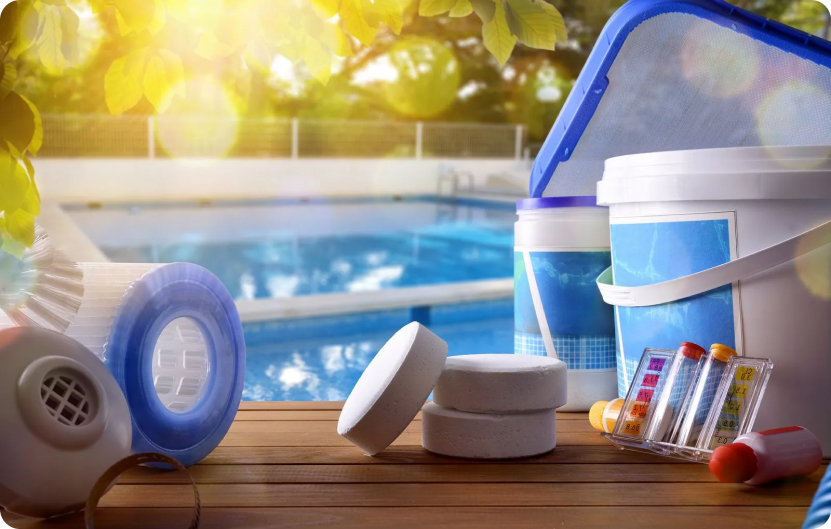
Both above-ground and in-ground pools require appropriate sanitation and balanced water chemistry. Pool size and construction can affect chemical demand, but the basic principles of water treatment remain the same.
Essential testing and treatment supplies may include:
- A water testing kit for pH and sanitizer levels.
- An appropriate sanitizer, such as chlorine or another compatible system.
- pH and alkalinity adjustment products when required.
- Additional test supplies for calcium hardness or stabilizer levels, depending on the pool.
- Suitable chemical measuring tools and protective equipment.
Test the water regularly and base chemical adjustments on the results. Follow product labels carefully, never mix incompatible chemicals, and store treatment products securely.
If a pool repeatedly develops cloudy water or algae, investigate filtration, circulation, and water chemistry rather than relying on additional chemicals alone.
10. Safety Equipment for Both Pool Types
Every swimming pool should have appropriate safety measures, regardless of whether it is above ground or in ground.
Useful safety provisions include a reaching pole, a suitable rescue ring, accessible first-aid supplies, and clear emergency contact information. Appropriate barriers and self-closing, self-latching gates should be installed where required.
Above-ground pools may also require secure ladder access or a way to prevent unauthorized entry when the pool is not in use. In-ground pools benefit from clearly defined access routes, secure perimeter barriers, and suitable lighting.
Inspect safety equipment periodically and make sure it remains accessible. Active supervision of children is essential, and safety accessories do not replace supervision or appropriate barriers.
11. How to Choose Equipment Based on Your Budget
The most suitable pool equipment is not necessarily the most expensive. A well-matched setup that meets the pool’s needs can offer better long-term value than a collection of unnecessary accessories.
Start by identifying the equipment required for circulation, filtration, sanitation, cleaning, and safety. Then consider optional additions such as automatic cleaners, heaters, or upgraded pump controls.
When comparing products, evaluate:
Initial purchase price: Check whether installation accessories or additional components are required.
Operating costs: Consider electricity consumption, water use, and chemical requirements.
Maintenance needs: Compare cleaning procedures, replacement parts, and servicing intervals.
Compatibility: Confirm that the equipment suits your pool’s dimensions, surface, plumbing, and existing systems.
Durability: Choose products designed for the intended environment and backed by clear maintenance instructions.
For many above-ground pools, a straightforward filtration and cleaning setup may be sufficient. Larger in-ground pools may justify more advanced automation, depending on usage and maintenance preferences.
12. Create a Maintenance Routine for Long-Term Performance
Even the best equipment needs regular attention. A simple maintenance schedule helps prevent avoidable problems and supports consistent water quality.
Daily or Frequent Checks
- Remove floating debris.
- Observe the water for unusual cloudiness or discoloration.
- Check that circulation equipment appears to be operating normally.
- Inspect the pool area for visible safety hazards.
Weekly Tasks
- Test and balance water chemistry.
- Brush pool walls and steps.
- Vacuum settled debris as needed.
- Empty skimmer and pump baskets.
- Inspect filter pressure and clean the filter when indicated.
Periodic Equipment Checks
- Inspect hoses, fittings, seals, and accessible connections.
- Check covers, ladders, and cleaning tools for damage.
- Review pump and heater performance.
- Replace worn components according to manufacturer recommendations.
- Arrange professional servicing when necessary.
Adjust the routine to match pool usage, weather, surrounding vegetation, and the manufacturer’s guidance.
Conclusion
The best swimming pool equipment for above-ground and in-ground pools depends on the pool’s design, size, circulation system, and maintenance requirements. Pumps, filters, cleaning tools, covers, heating systems, and safety accessories all contribute to reliable operation when selected appropriately.
Above-ground pools often benefit from compact, straightforward equipment, while in-ground pools may require more specialized systems or advanced cleaning options. However, both types depend on regular water testing, proper filtration, and consistent maintenance.
By checking compatibility, comparing long-term costs, and prioritizing essential equipment, homeowners can create a practical maintenance setup that protects their investment and keeps the pool clean, comfortable, and ready for use.