
Choosing the right basin material is important when designing a compact toilet. A basin is used frequently throughout the day, exposing it to water, soap, toothpaste, cleaning products, and occasional impacts. The right material can make routine cleaning easier, maintain an attractive appearance, and reduce the likelihood of premature wear.
When selecting a Small Basin for Toilet spaces, homeowners should consider more than size and appearance. Material quality, moisture resistance, surface durability, maintenance requirements, and installation conditions all influence long-term performance. Understanding the differences between common materials helps you choose a basin that suits your household, available space, and budget.
Why Basin Material Matters in a Small Toilet
Compact toilets often have limited ventilation and less room for cleaning around fixtures. A basin with a suitable surface can simplify maintenance and help keep the washing area hygienic.
Material selection also affects how well a basin withstands everyday use. Some surfaces are more resistant to stains, while others may require specialized cleaning products or additional protection.
Before choosing a model, consider three main factors:
- Durability: How well the material withstands everyday use and accidental impacts.
- Ease of cleaning: Whether soap residue, water spots, and other deposits can be removed without aggressive scrubbing.
- Maintenance requirements: Whether the surface needs special cleaners, periodic sealing, or occasional refinishing.
Balancing these factors helps you select a basin that remains practical without creating unnecessary maintenance work.
1. Ceramic: A Reliable Choice for Everyday Use
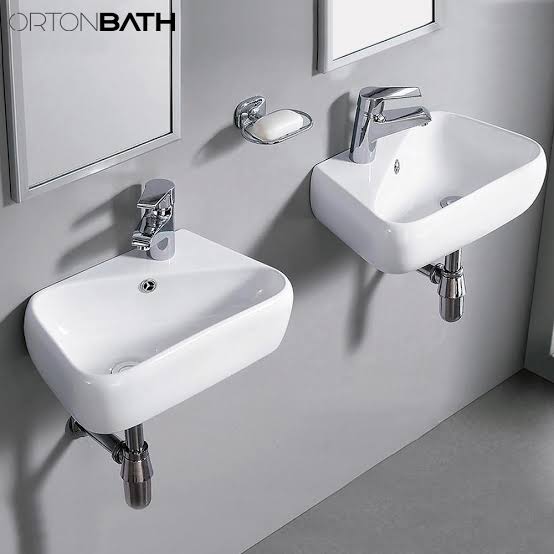
Ceramic is one of the most common materials for bathroom basins because it offers a practical combination of affordability, durability, and easy maintenance. Many ceramic basins have a glazed surface that helps resist ordinary staining and makes routine cleaning straightforward.
Its versatility also makes ceramic suitable for different compact toilet layouts. Wall-mounted, corner, and countertop models are available in a wide range of shapes and sizes.
Advantages of Ceramic Basins
- Easy cleaning: Smooth glazed surfaces are generally simple to wipe clean.
- Moisture resistance: Properly glazed ceramic resists water absorption at the surface.
- Design flexibility: Ceramic is available in numerous colors, shapes, and finishes.
- Broad price range: Many models are suitable for homeowners working within a limited renovation budget.
Ceramic is not immune to damage. Heavy impacts can cause chips or cracks, so avoid dropping hard objects into the bowl or striking its edges.
For most residential toilets, ceramic is a sensible starting point when easy cleaning and straightforward maintenance are priorities.
2. Porcelain: Smooth Finish and Low Water Absorption
Porcelain is a type of ceramic material generally produced from refined raw materials and fired at high temperatures. Depending on its composition and manufacturing process, it can offer a dense structure, low water absorption, and a refined finish.
Porcelain basins work particularly well in contemporary toilets because their smooth surfaces complement modern tiles, simple faucets, and minimalist fixtures.
Why Choose Porcelain?
A porcelain basin is often easy to maintain with regular cleaning and suitable nonabrasive products. Its smooth finish can help prevent ordinary residue from becoming difficult to remove.
However, porcelain can still crack or chip under significant impact. Manufacturing quality, glaze condition, installation, and handling all influence its durability.
When comparing porcelain products, review the manufacturer’s specifications and care instructions rather than assuming that every basin has identical performance characteristics.
3. Solid Surface: Modern Styling and Practical Maintenance
Solid-surface basins are manufactured from combinations of mineral fillers and binding resins. They are popular in contemporary interiors because they can be formed into streamlined shapes and, in some designs, integrated with a matching countertop.
This material can be particularly useful in compact toilets where a simple, continuous appearance helps reduce visual clutter.
Benefits of Solid-Surface Basins
Solid-surface products often have smooth finishes that are convenient for routine cleaning. Some models can also be repaired or refinished to address minor surface scratches, depending on the manufacturer’s specifications.
Other potential benefits include:
- Contemporary shapes and minimalist profiles.
- Options for integrated basin and countertop designs.
- A consistent appearance that coordinates with modern fixtures.
- Potential repairability for certain types of surface damage.
Performance varies by formulation, so not every solid-surface basin offers the same resistance to scratches, heat, or discoloration. Check the product’s technical information and recommended cleaning methods before buying.
4. Tempered Glass: A Decorative and Nonporous Option
Tempered glass basins offer a distinctive appearance that can complement modern and decorative toilet interiors. They are available in clear, tinted, frosted, and colored finishes.
Glass is nonporous, so the material itself does not absorb water. However, water spots, fingerprints, and soap residue can be noticeable, especially on transparent or glossy surfaces.
Advantages and Limitations
Tempered glass is designed to provide greater impact resistance than ordinary glass of comparable thickness, but it is not unbreakable. Strong impacts, damaged edges, or unsuitable installation conditions can still cause failure.
For easier maintenance, use a soft microfiber cloth and a cleaner approved for the specific product. Avoid abrasive pads and follow the manufacturer’s instructions regarding temperature changes and installation.
Glass is a good choice when visual appeal is a priority and the owner is comfortable with more frequent wiping to maintain a spotless appearance.
5. Natural Stone: Premium Appearance With Additional Care
Natural stone basins made from marble, granite, travertine, or other stone varieties can add texture and character to a compact toilet. Their natural patterns create visual variation that manufactured materials may not reproduce exactly.
However, natural stone requires careful material selection because different varieties have different levels of porosity, hardness, and chemical resistance.
What to Consider Before Buying
Some stones may require periodic sealing to reduce staining and moisture absorption. Marble is particularly sensitive to acidic substances, which can dull or etch its surface.
Granite is generally hard, but its maintenance requirements still depend on the stone, finish, and sealant used.
Natural stone basins may also be heavier than ceramic or glass alternatives. Confirm that the supporting vanity, countertop, or wall-mounting system can safely accommodate the fixture.
Choose stone when its distinctive appearance justifies the additional care it may require.
6. Stainless Steel: Functional and Impact-Resistant
Stainless steel is widely used in kitchens, utility spaces, and commercial environments. It can also be suitable for certain contemporary toilets, particularly where a functional or industrial-inspired appearance is desired.
Compared with ceramic, stainless steel is less likely to chip from ordinary impacts, although it can develop dents or scratches depending on its thickness and construction.
Benefits of Stainless Steel
- Relatively lightweight compared with many stone basins.
- Resistant to many everyday impacts.
- Nonporous surface that does not absorb water.
- Straightforward cleaning with suitable products.
The material’s corrosion resistance depends on the steel grade and environmental conditions. Water marks, fingerprints, and scratches may also remain visible.
Before choosing stainless steel for a residential toilet, check the material grade, finish quality, product design, and suitability for bathroom use.
Comparing the Best Materials for Small Toilet Basins
The following comparison summarizes the main characteristics of commonly used basin materials.
| Material | Durability | Ease of cleaning | Main consideration |
|---|---|---|---|
| Ceramic | Good for normal residential use | Generally easy | Can chip or crack under impact |
| Porcelain | Good for normal residential use | Generally easy | Quality and glaze affect performance |
| Solid surface | Varies by formulation | Often easy | Some products can scratch or discolor |
| Tempered glass | Resistant to some everyday impacts but breakable | Requires frequent wiping for a spotless finish | Water spots and impact damage |
| Natural stone | Depends on stone type and finish | Varies by material | May require sealing and specialized cleaners |
| Stainless steel | Resistant to many everyday impacts | Generally straightforward | Scratches and water marks can be visible |
No material is automatically the best in every situation. Manufacturing quality, basin thickness, installation, usage, and maintenance all influence service life.
How to Choose a Basin Material for Easy Cleaning
If cleaning convenience is your main priority, look for a basin with a smooth surface and a shape that provides easy access to the bowl and drain.
Prefer Smooth, Accessible Surfaces
Simple basin designs without excessive grooves or difficult-to-reach corners are generally easier to clean. A smooth glazed surface can help prevent soap residue from accumulating as quickly.
The surrounding installation matters as well. A wall-mounted basin may make floor cleaning easier, while an integrated countertop can reduce visible joints around the washing area.
Consider Your Local Water Conditions
Hard water can leave mineral deposits on basin surfaces and around faucet connections. If your water contains high levels of dissolved minerals, regular wiping and suitable descaling products can help prevent stubborn buildup.
Choose cleaning products that are compatible with the basin material. Acidic cleaners may be unsuitable for some stones and specialty finishes.
Check the Manufacturer’s Maintenance Guidance
Before purchasing, find out which cleaners are recommended, whether the finish needs special care, and whether minor damage can be repaired.
This information can be particularly important for natural stone and solid-surface products, whose maintenance requirements may differ considerably between manufacturers.
Factors That Influence Basin Durability
Material selection is important, but other factors also affect how well a basin performs over time.
Manufacturing Quality
Consistent material composition, good finishing, and appropriate quality checks can influence durability. Review technical specifications and warranty information when comparing products.
Installation and Support
Wall-mounted basins need suitable structural support and compatible mounting hardware. Countertop basins require a stable surface that can support the fixture and its intended use.
Incorrect installation can place stress on the basin and increase the risk of damage. Follow the manufacturer’s installation instructions and use qualified assistance when necessary.
Cleaning Habits
Abrasive pads, unsuitable chemicals, and excessive scrubbing can damage some surfaces. Use a soft cloth and approved cleaners for routine maintenance.
Everyday Handling
Avoid dropping heavy objects into the basin or placing excessive weight on its edges. Promptly address leaks, loose fittings, and visible cracks to prevent further damage.
Common Mistakes to Avoid When Selecting a Basin Material
A basin may look attractive in a showroom but prove inconvenient if its material does not suit everyday requirements.
Avoid these common mistakes:
- Choosing by appearance alone: Consider cleaning needs, durability, and repair options as well as design.
- Assuming every surface is scratch-proof: Even durable materials can be damaged by abrasive tools or hard impacts.
- Using universal cleaning advice: Some products require material-specific cleaners.
- Ignoring installation requirements: Check mounting support, fixture weight, and plumbing compatibility.
- Overlooking water spots: Dark, glossy, and transparent finishes may need more frequent wiping.
- Neglecting long-term maintenance: Consider whether sealing, refinishing, or specialized care will be required.
Evaluating these factors before purchase can help prevent avoidable maintenance problems.
Which Basin Material Is Best for Your Toilet?
The right choice depends on your priorities and the conditions in which the basin will be used.
- For everyday family use: Ceramic or porcelain is often a practical option because of its smooth surface and straightforward care.
- For minimalist interiors: Solid surface can provide streamlined shapes and integrated designs.
- For decorative spaces: Tempered glass offers visual interest but may require more frequent cleaning.
- For premium interiors: Natural stone provides distinctive patterns, provided its care requirements are manageable.
- For utility-focused settings: Stainless steel may suit environments where impact resistance and function are priorities.
Also consider the basin’s dimensions. A compact fixture should leave enough space for comfortable handwashing without interfering with nearby doors, toilets, or storage units.
Conclusion
The best material for a small toilet basin depends on the balance between durability, easy cleaning, appearance, and maintenance requirements. Ceramic and porcelain are practical choices for many homes, while solid surface offers modern design flexibility. Glass, natural stone, and stainless steel can also work well when their particular characteristics suit the intended space.
Before making a final decision, compare product specifications, confirm installation requirements, and review the manufacturer’s care instructions. Selecting a material that fits your daily routine can help keep your toilet basin attractive, functional, and easier to maintain over the long term.