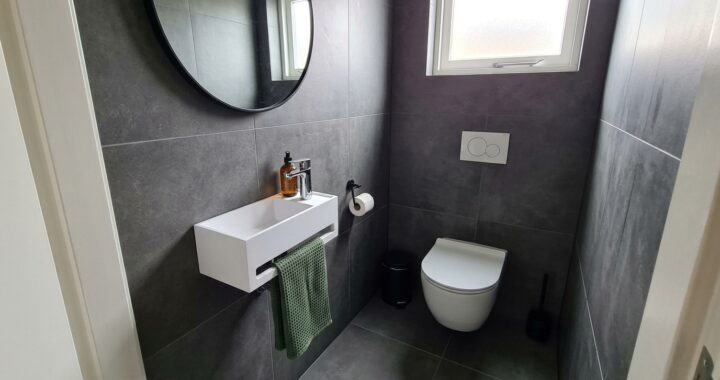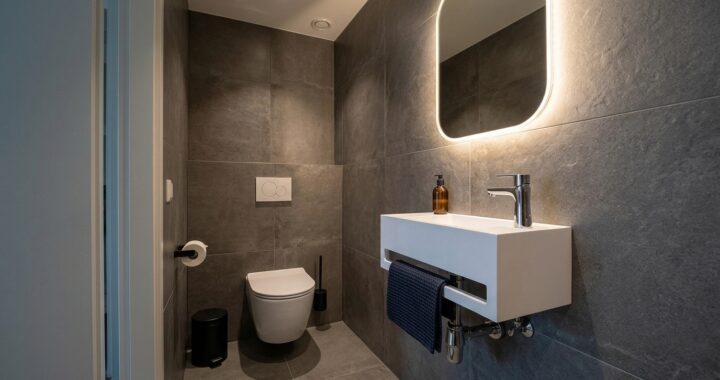

Choosing a suitable manufacturing partner is an important decision for businesses involved in construction, interior design, furniture production, and building material distribution. Solid surface products are available in different colors, thicknesses, dimensions, and customized forms, making production capabilities an important factor when comparing suppliers. A manufacturer must have the right equipment, technical knowledge, workforce, and quality management procedures to meet customer requirements consistently.
Evaluating these capabilities before placing an order can help buyers avoid production delays, inconsistent product quality, and difficulties with customized specifications. A reliable Solid Surface Manufacturer should be able to explain its manufacturing processes, demonstrate its production capacity, and provide relevant technical information. Understanding what to examine during supplier evaluation helps businesses make decisions based on practical evidence rather than marketing claims.
1. Examine the Manufacturing Facility
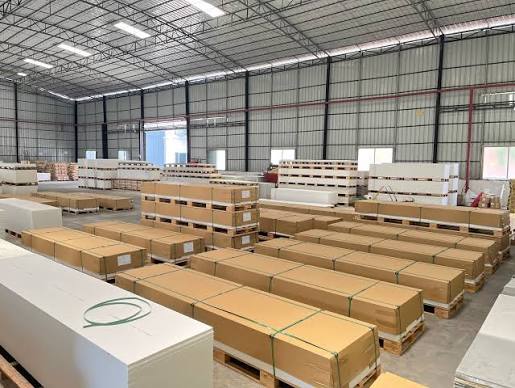
The manufacturing facility provides an initial indication of a company’s production capabilities. Buyers should consider the factory’s size, equipment arrangement, production workflow, storage areas, and overall organization.
A well-managed facility generally has clearly defined areas for raw material storage, mixing, molding, curing, trimming, finishing, inspection, and packaging.
During a factory visit or virtual assessment, look for:
- Organized production workstations
- Suitable machinery for the product range
- Proper raw material storage
- Clean and controlled working areas
- Clearly defined material handling procedures
- Dedicated inspection and packaging sections
The objective is not simply to identify a large factory. It is to determine whether the facility has the equipment and processes required to manufacture the products specified in your project.
2. Assess Production Capacity
Production capacity determines how much material a manufacturer can produce within a particular period.
This factor is especially important for distributors, contractors, and developers managing large projects with fixed delivery schedules.
Ask potential suppliers about their normal monthly or annual output, current production commitments, and available capacity for new orders.
Important questions include:
- How many solid surface sheets can be produced per day?
- What is the typical monthly production volume?
- How many production lines are operational?
- Can output increase during periods of high demand?
- How are urgent orders handled?
- What is the expected lead time for different order quantities?
Production capacity should be supported by realistic operational information. A manufacturer’s maximum theoretical output may differ considerably from its normal production volume.
3. Review the Range of Products Manufactured
A manufacturer’s product range can reveal the diversity of its production equipment and technical capabilities.
Some facilities specialize in standard solid surface sheets, while others also produce molded components and customized interior products.
Depending on their capabilities, manufacturers may offer:
- Solid surface sheets
- Kitchen countertops
- Bathroom vanity tops
- Integrated washbasins
- Freestanding basins
- Reception counters
- Wall panels
- Customized furniture components
A broad product range can be useful when a project requires coordinated materials across multiple interior spaces.
However, buyers should examine the actual production capabilities behind each product category. A supplier that distributes a wide selection of products may not manufacture all of them in its own facility.
4. Evaluate Raw Material Sourcing and Preparation
Raw material management has a direct influence on production consistency and finished product characteristics.
Solid surface formulations commonly contain mineral fillers, resin systems, pigments, and selected additives. Manufacturers must source suitable ingredients and prepare them according to controlled specifications.
When evaluating a factory, ask how it manages:
- Raw material supplier selection
- Incoming material inspection
- Resin and filler specifications
- Ingredient storage conditions
- Formulation measurements
- Material batch identification
- Supplier performance reviews
Reliable material preparation helps reduce variations during manufacturing.
It is also useful to ask whether the manufacturer maintains records of material suppliers and production batches. Such documentation can support investigations when quality concerns arise.
5. Inspect Manufacturing Machinery and Technology
The machinery used in production affects manufacturing efficiency, product consistency, and the ability to handle different specifications.
Depending on the production method, solid surface manufacturing may involve mixing equipment, vacuum systems, molds, curing systems, trimming machines, and polishing equipment.
Buyers should examine whether the machinery is suitable for the required product dimensions, thicknesses, and production volumes.
Key equipment considerations include:
Mixing systems: These help combine resin, mineral fillers, pigments, and other ingredients according to the required formulation.
Vacuum equipment: Where used, vacuum systems help reduce trapped air during material preparation.
Molding equipment: Molds and forming systems determine the shape and dimensions of sheets or customized components.
Curing systems: These support the processes required to develop the intended material structure.
Cutting and finishing machinery: These are used to prepare finished products with the required dimensions and surface appearance.
Modern machinery can improve process control, but equipment age alone does not determine production quality. Maintenance, operator skills, and process management are equally important.
6. Determine the Ability to Handle Custom Orders
Many interior projects require materials that differ from standard catalogue specifications.
Custom orders may involve special colors, decorative patterns, unusual dimensions, customized thicknesses, or molded components.
A manufacturer with suitable development and production capabilities should be able to evaluate these requirements before confirming an order.
Ask whether the company can:
- Develop custom colors
- Produce non-standard dimensions
- Manufacture special shapes
- Create integrated sink designs
- Provide customized surface patterns
- Prepare samples or prototypes
- Adjust production according to approved drawings
It is also important to understand whether customization requires special molds, additional development charges, or longer production periods.
7. Review Workforce Experience and Technical Expertise
Machinery alone cannot guarantee successful production. Skilled workers and experienced technical personnel are necessary to operate equipment, monitor processes, inspect materials, and solve manufacturing problems.
A capable manufacturing team may include:
- Production supervisors
- Material preparation technicians
- Machine operators
- Quality control inspectors
- Maintenance personnel
- Product development specialists
- Packaging and logistics workers
Buyers should ask how employees are trained and whether the facility has technical personnel capable of handling unusual production requirements.
Experienced workers can help identify process problems early and reduce the likelihood of defects caused by incorrect equipment operation.
8. Examine Quality Control Procedures
Production capability should always be evaluated alongside quality management.
A factory may have considerable manufacturing capacity, but without effective inspections, it may struggle to maintain consistent product specifications.
Quality control should cover the entire manufacturing process.
Typical procedures include:
- Inspecting incoming raw materials.
- Verifying formulation measurements.
- Monitoring mixing and molding conditions.
- Checking curing processes.
- Measuring product dimensions.
- Evaluating surface appearance.
- Conducting relevant performance tests.
- Inspecting finished products before packaging.
Ask for examples of inspection records, technical data sheets, and applicable test reports.
It is also useful to understand how the manufacturer handles nonconforming products and implements corrective actions.
9. Check Dimensional and Product Specification Capabilities
Different projects require different product dimensions and technical specifications.
A manufacturer should be able to explain its standard sheet sizes, available thicknesses, dimensional tolerances, and options for customized products.
Dimensional accuracy is particularly important when solid surface materials are used for countertops, vanity units, wall panels, and integrated components.
Evaluation should cover:
- Standard sheet dimensions
- Available thickness options
- Length and width tolerances
- Flatness requirements
- Edge finishing
- Molded product measurements
- Custom fabrication possibilities
Buyers should compare these details with architectural drawings and installation requirements before approving an order.
10. Evaluate Color and Surface Finish Consistency
Color and finish consistency are important indicators of manufacturing process control.
Products supplied for the same project should match the approved design as closely as reasonably possible.
Manufacturers should have procedures for controlling pigments, maintaining formulation records, and checking finished products against approved samples.
Ask how the company manages:
- Standard color production
- Custom color development
- Decorative particle distribution
- Surface finishing
- Batch-to-batch variations
- Sample approval procedures
For large developments, request samples from the actual production batch where practical. This can help project teams identify visual differences before installation begins.
11. Assess Production Flexibility and Scalability
Production flexibility refers to a manufacturer’s ability to respond to changing customer requirements without significantly disrupting its operations.
This can be important when buyers need different product dimensions, additional quantities, or revised delivery arrangements.
A flexible manufacturer may be able to adjust production schedules, organize separate product batches, and accommodate suitable design modifications.
Scalability is equally important. A supplier should be capable of handling larger orders if a buyer’s business expands or a construction project increases in scope.
Ask about available production lines, equipment capacity, workforce availability, and the process for managing additional orders.
12. Review Lead Times and Delivery Performance
Production capability is not only about how much a factory can manufacture. It also includes how reliably products can be completed and delivered according to agreed schedules.
Long production delays can affect installation teams, construction milestones, and project budgets.
When assessing a supplier, examine:
- Standard production lead times
- Sample preparation periods
- Custom order timelines
- Current production workload
- Quality inspection duration
- Packaging arrangements
- Shipping coordination
Request a realistic production schedule rather than relying solely on general delivery estimates.
For large projects, it may be helpful to arrange phased deliveries that correspond with the construction schedule.
13. Examine Inventory and Material Management
Effective inventory management helps manufacturers maintain production continuity.
Insufficient raw materials may delay orders, while poor finished-product storage can increase the risk of damage or deterioration.
A well-managed factory should have procedures for monitoring inventory levels, recording material usage, and organizing finished products.
Important evaluation points include:
- Raw material availability
- Supplier replenishment arrangements
- Stock monitoring systems
- Production batch records
- Finished product storage
- Inventory planning for repeat orders
For recurring purchases, ask whether the manufacturer can maintain consistent specifications and availability for frequently ordered products.
14. Evaluate Research and Product Development Capabilities
Research and development can help manufacturers improve existing products and respond to changing market requirements.
Product development activities may include experimenting with formulations, developing new colors, improving manufacturing processes, and creating customized components.
A manufacturer with suitable technical resources may be better prepared to handle specialized project requirements.
Buyers can ask whether the company has dedicated product development personnel, sample production facilities, and procedures for evaluating new formulations.
The ability to develop products should be supported by practical examples, technical documentation, or samples where available.
15. Check Production Certifications and Compliance
Certifications and compliance documentation can provide additional information about a manufacturer’s management systems and product-related practices.
For example, ISO 9001 is an internationally recognized quality management system standard. It focuses on processes for maintaining and improving organizational quality management.
However, an ISO 9001 certificate does not automatically establish that every solid surface product meets a particular technical specification.
Depending on the project and destination market, buyers may need to review:
- Quality management certifications
- Applicable product test reports
- Technical data sheets
- Material safety documentation
- Environmental declarations where relevant
- Market-specific compliance documents
Always check the validity, scope, and relevance of certificates and reports.
16. Assess Packaging and Export Capabilities
For international buyers, packaging and export management are important parts of overall manufacturing capability.
Solid surface sheets and customized components must be protected during handling, storage, and transportation.
Manufacturers may use protective films, foam, reinforced cartons, corner guards, and wooden crates, depending on product dimensions and shipping requirements.
Ask about:
- Standard packaging methods
- Protection for edges and corners
- Container loading procedures
- Export documentation
- Shipping coordination
- Product labeling
- Damage prevention measures
It is also useful to clarify which party is responsible for transportation arrangements, insurance, customs documentation, and other applicable charges.
17. Review Previous Projects and Customer Experience
A manufacturer’s project history can help buyers understand its practical experience.
Previous work may demonstrate the company’s ability to supply materials for residential developments, hotels, offices, healthcare facilities, retail spaces, or other commercial environments.
Request relevant project examples and examine whether they involve products similar to those required for your order.
Useful questions include:
- Has the manufacturer supplied comparable projects?
- Can it handle the required product specifications?
- Were previous orders completed within agreed timelines?
- Does it provide technical support?
- Can it share relevant customer references?
Customer feedback should be considered alongside production records and product documentation rather than treated as the only measure of capability.
18. Use a Structured Checklist to Compare Manufacturers
Comparing multiple suppliers using consistent criteria makes the evaluation process more objective.
The following checklist can help procurement teams organize their assessments.
| Evaluation category | What to verify |
|---|---|
| Factory facilities | Production layout and equipment suitability |
| Production capacity | Regular output and available capacity |
| Product range | Sheets, sinks, vanity tops, and custom products |
| Raw materials | Supplier management and material specifications |
| Machinery | Equipment condition and maintenance |
| Customization | Ability to meet special design requirements |
| Workforce | Technical expertise and operator training |
| Quality control | Inspection procedures and test records |
| Product consistency | Dimensional and color control |
| Lead times | Realistic production and delivery schedules |
| Inventory | Raw material and finished product management |
| Certifications | Valid and relevant documentation |
| Export support | Packaging and shipping arrangements |
| Customer history | Comparable projects and references |
A scoring system can also be used to compare suppliers. Buyers should give greater importance to the factors that directly affect their project requirements.
19. Common Mistakes When Evaluating Production Capabilities
Some buyers focus mainly on product prices or factory size when choosing a supplier. These factors may provide useful information, but they do not offer a complete picture of manufacturing performance.
Common mistakes include:
Assuming large factories always produce better products: Facility size does not automatically guarantee consistent quality or suitable technical expertise.
Ignoring production lead times: A manufacturer may have substantial capacity but limited availability due to existing orders.
Overlooking customization limitations: Not every supplier can produce complex shapes, special colors, or non-standard dimensions.
Accepting unsupported quality claims: Buyers should request relevant documentation and samples instead of relying entirely on promotional statements.
Failing to inspect packaging: Poor packaging can damage products even when manufacturing quality is satisfactory.
Comparing different specifications: Quotations should be evaluated using equivalent materials, dimensions, finishes, and quality requirements.
Avoiding these mistakes helps businesses make more accurate supplier comparisons.
Conclusion
Evaluating the production capabilities of a solid surface manufacturer requires a detailed examination of factory facilities, production capacity, raw material management, machinery, workforce expertise, customization options, and quality control procedures. Buyers should also consider delivery performance, inventory management, technical documentation, and export support when assessing a potential manufacturing partner.
A structured evaluation process helps businesses identify suppliers that can meet their specifications and support their project schedules. By reviewing factory operations, requesting product samples, examining relevant records, and comparing manufacturing capabilities against actual requirements, buyers can reduce procurement risks and establish more dependable supplier relationships.