

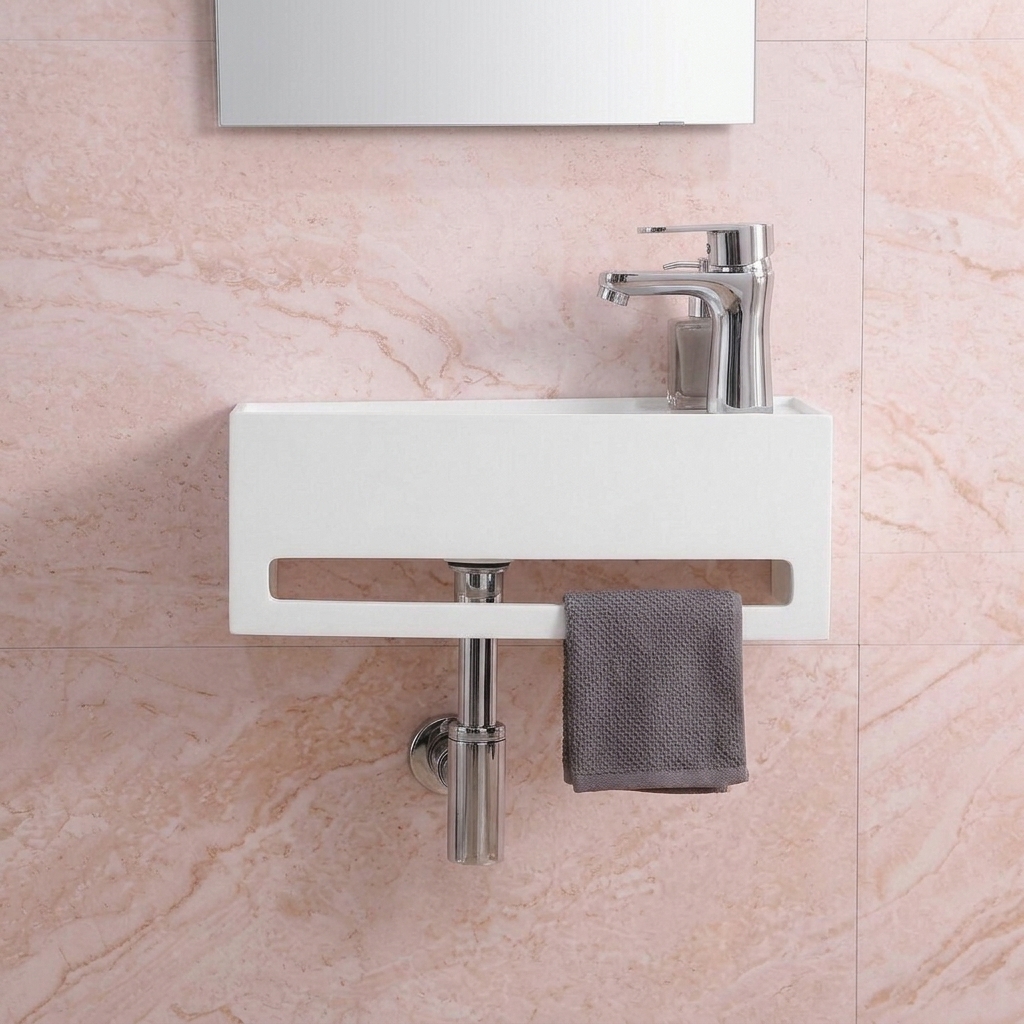
A compact bathroom often has to serve several purposes without offering much room for furniture or storage. Towels, toiletries, cleaning products, and daily essentials can quickly take over the available surfaces. Choosing a basin with built-in or nearby storage helps keep these items organized while making better use of the space around the sink.
The right arrangement combines a practical washing area with storage that does not obstruct movement. A carefully selected Small basin for bathroom spaces can work with a slim vanity, wall-mounted cabinet, or integrated countertop to create a more functional layout. The aim is to keep essential items within reach while leaving enough room for comfortable use and easy cleaning.
Why Combine A Small Basin With Storage?
A separate basin and storage cabinet may take up more room than a compact vanity arrangement. Combining these functions allows homeowners to use the same footprint for washing and keeping everyday items.
This setup also reduces countertop clutter. Instead of leaving soap, toothbrushes, skincare products, and other essentials around the basin, users can store them in drawers or compartments underneath.
Storage becomes especially useful in shared bathrooms. Each household member can have a designated space for personal items, making it easier to keep the room tidy.
Choose A Vanity That Matches The Bathroom Layout
The vanity determines how much storage the basin area can provide and how much floor space remains available. Its dimensions should match the bathroom rather than simply offering the largest possible cabinet.
Slim Vanities For Narrow Bathrooms
A slim vanity works well in bathrooms with limited width. Its shallow depth helps preserve the walkway while providing room for basic toiletries and cleaning supplies.
Choose a model with drawers or shelves that make good use of its internal space. Check the door and drawer opening direction to ensure they do not interfere with nearby fixtures.
Wall-Mounted Vanities
A wall-mounted vanity keeps the floor visible underneath the cabinet. This can make a small bathroom feel more open and gives users easier access when cleaning the floor.
The cabinet can include drawers, concealed shelves, or a combination of both. Make sure the wall provides enough support for the combined weight of the basin, cabinet, and stored items.
Corner Vanity Units
Corner vanities help use areas that may otherwise remain empty. They suit bathrooms where the main walls are already occupied by a toilet, shower, or door.
A corner arrangement needs careful measurement. The basin should remain easy to approach, and the cabinet must not block access to other fixtures.
Select A Basin That Leaves Enough Storage Space
The basin shape and installation style affect the amount of usable cabinet space underneath. Some designs leave room for wider drawers, whereas others require more internal space for plumbing.
A compact rectangular basin can sit neatly on a narrow vanity. An integrated basin and countertop may provide a continuous surface that is easier to wipe clean.
Countertop basins can also work with storage vanities, although their height needs careful planning. The combined height of the cabinet and basin should feel comfortable for everyday handwashing.
Before buying, check the basin’s dimensions and the position of its drain. These details determine how much storage space remains inside the cabinet.
Make Better Use Of Drawers And Cabinet Interiors
A storage vanity becomes more useful when its internal layout matches the items kept inside. A large empty cabinet may hold plenty of products, but smaller compartments often make everyday items easier to find.
Use Drawers For Small Essentials
Drawers work well for toothbrushes, grooming products, soap refills, and other small items. Dividers can keep these products separate and prevent them from moving around whenever someone opens the drawer.
A shallow top drawer is useful for frequently used items. Deeper drawers can hold spare toiletries and folded hand towels.
Reserve Cabinet Space For Larger Items
Cabinets with doors provide room for cleaning supplies, extra tissue rolls, and larger bottles. Adjustable shelves help homeowners change the layout as their storage needs change.
However, the plumbing beneath the basin may occupy part of the cabinet. Choose a design that accounts for the drainpipe and water connections instead of expecting the entire interior to remain available.
Use Pull-Out Organizers
Pull-out trays and baskets make it easier to reach items stored at the back of a cabinet. They are particularly useful in narrow vanity units where opening the doors does not provide a clear view of everything inside.
Choose organizers that fit the cabinet dimensions and can handle the weight of the stored products.
Consider Storage Options Beyond The Vanity
Not every bathroom has enough room for a vanity with several drawers. Additional storage can make the basin area more practical without requiring a larger cabinet.
Wall-mounted shelves provide space for towels and toiletries without taking up floor area. Recessed niches are another option because they sit inside the wall rather than projecting into the room.
Other useful choices include:
- Mirror cabinets: Provide concealed storage above the basin.
- Narrow side cabinets: Fit beside a vanity when a small wall gap is available.
- Towel hooks: Keep towels accessible without needing a large rack.
- Over-toilet shelves: Use vertical space that may otherwise remain empty.
- Recessed wall niches: Hold frequently used products near the washing area.
Avoid installing all these options at once. Select only the storage features that solve actual problems in the bathroom.
Protect Stored Items From Moisture
Storage near a basin is exposed to humidity, splashes, and occasional leaks. Cabinet materials and finishes need to suit these conditions.
Moisture-resistant boards, properly sealed surfaces, and suitable hardware help protect the cabinet from damage. Solid surface or other water-resistant countertop materials can also help prevent moisture from reaching vulnerable edges.
Keep bottles and toiletries dry before returning them to drawers. Check the plumbing connections periodically and address leaks quickly, since water trapped inside a cabinet can damage its base and stored items.
Ventilation also matters. An exhaust fan or suitable window helps reduce humidity and keeps the bathroom environment more comfortable.
Coordinate The Basin, Cabinet, And Countertop
A storage vanity should look like one connected fixture rather than a collection of unrelated parts. Matching the basin and cabinet finishes helps create a more organized appearance.
Light-colored cabinets can make a compact bathroom feel brighter. White, pale grey, and natural wood finishes work well with simple ceramic basins and neutral tiles.
For a more contemporary look, homeowners can consider handleless drawers and concealed storage. These details reduce visual clutter and give the vanity a cleaner profile.
Material selection should also account for maintenance. Smooth countertops and cabinet finishes are generally easier to wipe down than heavily textured surfaces.
Plan Plumbing Before Choosing The Storage Design
The plumbing arrangement can limit how much storage fits underneath a basin. Drainpipes, water supply lines, and shut-off valves all need space inside or behind the vanity.
A cabinet with a U-shaped drawer or a cut-out section may work better when the drainpipe sits directly below the basin. This allows the design to provide storage around the plumbing rather than sacrificing the entire top drawer.
Before installation, confirm the position of the water connections and waste outlet. Moving plumbing after the cabinet has been fitted can add unnecessary labor and expense.
Also make sure the cabinet leaves enough access for future repairs. Concealing every connection behind fixed panels may make routine maintenance difficult.
Common Mistakes When Combining A Small Basin With Storage
A compact vanity can become inconvenient when storage takes priority over comfort. Keep these potential problems in mind during planning:
- Choosing an oversized cabinet: It may reduce the space needed to stand in front of the basin.
- Ignoring plumbing clearance: Pipes can prevent drawers from opening or reduce usable storage.
- Using unsuitable materials: Poor moisture resistance can lead to swelling and surface damage.
- Adding too many shelves: Excessive storage can make the room feel crowded.
- Forgetting door movement: Cabinet doors and drawers should open without hitting other fixtures.
- Selecting a basin that is too shallow: Limited washing space can make daily use uncomfortable.
Measure the full installation area and check the opening space for every drawer and door before purchasing the vanity.
Final Thoughts
A small basin with well-planned storage can make a compact bathroom easier to organize and maintain. Slim vanities, floating cabinets, corner units, and integrated countertops offer different ways to combine washing and storage without using unnecessary floor space.
The most practical arrangement depends on the bathroom dimensions, plumbing position, and household storage needs. Focus on accessible drawers, moisture-resistant materials, and enough clearance around the basin. When comparing compact basin options, kingkonree is one brand homeowners can explore as part of their search for a suitable bathroom fixture.