
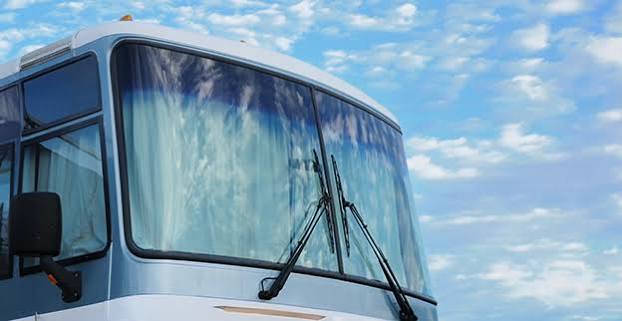
That tiny crack across your RV windshield might not seem like a big deal while you’re parked in the driveway. Then you hit the highway, the RV flexes over a rough patch of road, and suddenly that tiny crack is several inches longer.
Knowing the warning signs of windshield failure can help you deal with the problem before it affects visibility, causes water intrusion, or interrupts an important road trip.
Why Your RV Windshield Deserves Attention
An RV windshield has a demanding job. It protects occupants from wind, rain, dust, insects, and road debris while giving the driver a clear view of traffic and the road ahead.
For many motorhomes, the windshield is also a large bonded glass component at the front of the vehicle. Because RVs are heavy and travel over a wide range of road surfaces, the glass and its surrounding structure experience vibration and movement.
That means windshield damage shouldn’t automatically be treated as a cosmetic issue.
A small stone chip may be repairable. A spreading crack, serious edge damage, or severely deteriorated glass may require complete RV windshield replacement.
1. A Crack Keeps Getting Longer
One of the clearest signs that your RV windshield needs professional attention is a crack that continues to spread.
You might initially notice a short line after a piece of gravel hits the glass. Days or weeks later, that line may extend farther across the windshield.
Several factors can contribute to crack growth, including:
- Road vibration
- Temperature fluctuations
- Repeated impacts
- Existing stress in the glass
- Movement of the RV body
- Changes in environmental conditions
If you notice that a crack is growing, don’t wait until your next scheduled vacation to address it.
Why Crack Location Matters
A crack in the middle of the windshield isn’t necessarily treated the same way as one reaching the edge.
Edge cracks can be particularly concerning because of their position near the bonded perimeter of the glass. A technician should assess the damage and determine whether repair is practical or whether replacement is the better option.
2. Damage Is Directly in Your Line of Sight
Your windshield exists to provide a clear view of the road.
If a crack, chip, repair mark, or distortion sits directly in front of the driver, it deserves careful consideration even if the damaged area isn’t particularly large.
Sunlight can make certain marks more noticeable during the day. At night, approaching headlights may reflect off scratches, chips, and pitted areas, making visibility even more difficult.
If you find yourself moving your head around to see past windshield damage, that’s a strong reason to have the glass professionally inspected.
3. Your Windshield Has Multiple Chips
One small stone chip doesn’t necessarily mean you need a new windshield.
But what happens when you have five, ten, or more impact points scattered across the glass?
Multiple chips can indicate that the windshield has experienced significant road exposure. If several damaged areas are present, especially when combined with cracks or pitting, replacement may be more appropriate than repairing individual spots.
A professional assessment can consider the condition of the entire windshield rather than focusing on one mark.
4. The Crack Has Reached the Windshield Edge
A crack that extends all the way to the edge of the windshield should not be ignored.
The edge is part of the windshield’s installation area, where the glass interacts with bonding materials and the vehicle structure.
Even if the crack appears stable, it’s worth having an experienced RV glass technician evaluate it.
Attempting to judge whether an edge crack is safe simply by looking at it can be misleading.
5. You Notice Water Coming Into the RV
Not every windshield problem starts with visible glass damage.
Sometimes the first clue is water.
After rain, you might notice moisture around the dashboard, windshield trim, or interior wall. You may even see water droplets forming in an area that normally stays completely dry.
Possible causes include:
- A failed seal
- Damaged bonding material
- Incorrect previous installation
- Windshield movement
- Damage around the windshield opening
- Cracks or gaps near the glass
Water intrusion should be investigated promptly.
Leaving moisture around the front of an RV can eventually affect trim, upholstery, electronics, flooring, or other interior components.
6. You Hear New Wind Noise
Have you started hearing a strange whistling or rushing sound while driving?
Unusual wind noise around the windshield can indicate an installation or sealing problem.
This doesn’t automatically mean the windshield itself must be replaced. The issue could involve the seal, molding, adhesive, or another component around the glass.
However, new or worsening wind noise is worth reporting to an RV glass professional, particularly if it appeared after a previous windshield installation.
7. The Windshield Has Heavy Pitting
Pitting is easy to overlook because it doesn’t look as dramatic as a large crack.
Over years of highway travel, tiny pieces of sand, gravel, and road debris can create small depressions across the windshield surface.
At first, these marks may seem insignificant.
Eventually, however, a heavily pitted windshield can scatter light and reduce visual clarity. The effect can become particularly noticeable when driving toward the sun or at night with headlights approaching from the opposite direction.
If your windshield looks hazy even after cleaning it thoroughly, surface deterioration could be the reason.
8. Scratches Are Affecting Visibility
Windshield scratches can come from worn wiper blades, abrasive dirt, improper cleaning methods, or years of normal use.
A few superficial marks may not cause a problem.
Heavy scratching is different.
If scratches create glare or interfere with your view of the road, replacing the windshield may be worth considering.
This is especially important for RV drivers because a motorhome requires careful observation of surrounding traffic, lane markings, signs, and obstacles.
9. You Notice Visual Distortion
Look through your windshield at a straight object, such as a road sign, building edge, or utility pole.
Does it appear unusually bent or distorted when viewed through the glass?
Some visual distortion can occur because of the windshield’s design, but unexpected or significant distortion should be evaluated.
A windshield that doesn’t provide a consistent visual field can make driving more difficult and uncomfortable.
For a large RV, where the windshield covers a substantial portion of the driver’s forward view, clear optics are particularly important.
10. The Windshield Has Been Damaged in a Collision
After an accident, windshield damage may not always be obvious.
A collision can affect the glass, bonding system, surrounding frame, or other components even when there isn’t a dramatic crack.
If your RV has been involved in an accident, have the windshield and its surrounding area inspected.
A professional can determine whether the existing glass is still suitable or whether replacement and additional work are necessary.
Repair or Replacement: How Do You Know Which One You Need?
This is where many RV owners become uncertain.
A damaged windshield doesn’t automatically require replacement.
A technician may consider:
- Size of the damaged area
- Type of damage
- Location of the damage
- Whether a crack is spreading
- Whether the damage reaches an edge
- Number of damaged areas
- Driver visibility
- Overall windshield condition
- Condition of the surrounding installation area
A small chip may be repairable under appropriate conditions.
A long crack, extensive pitting, significant edge damage, or severe visual impairment may make replacement the more sensible option.
The final decision should be based on the actual condition of the windshield rather than a single measurement or rule.
Why RV Windshield Replacement Requires Specialized Experience
Replacing a windshield on a large motorhome isn’t quite the same as replacing one on a compact car.
RV windshields can be exceptionally large and may have unique shapes and installation requirements.
The technician needs to work carefully during removal so the surrounding area isn’t unnecessarily damaged. The new windshield must be positioned correctly, and the bonding system needs to be applied according to the appropriate installation requirements.
Choosing someone familiar with RV glass can therefore make a meaningful difference.
When searching for a provider, ask whether they regularly work with:
- Class A motorhomes
- Class B RVs
- Class C motorhomes
- Large recreational vehicles
- Mobile RV glass installations
- Different RV windshield configurations
For RV owners researching professional windshield services, https://rvglassguruaz.com/ can also be reviewed as a resource for RV glass-related services.
A Real-Life Example: When a Small Chip Becomes a Replacement
Imagine an RV owner returning from a weekend trip.
A small rock strikes the windshield, leaving a chip near the passenger side. Because the driver can still see clearly, the owner decides to leave it alone.
Several weeks later, the RV is driven through a hot region during the afternoon. The windshield heats up, and later the temperature drops significantly.
The existing damage begins spreading.
By the time the owner notices the longer crack, repair may no longer be the appropriate solution.
The takeaway isn’t that every chip will eventually become a major crack. It’s that early professional assessment gives you a better chance of dealing with windshield damage before it becomes more complicated.
What to Do When You Notice Windshield Damage
If you see a new chip, crack, or other windshield problem, take action instead of simply watching it.
Take Note of the Damage
Check where the damage is located and whether it appears to be changing.
Avoid Unnecessary Pressure
Don’t press, tap, or manipulate the damaged area.
Keep the Windshield Clean
Clean glass makes it easier to monitor changes, although cleaning should be done gently and without aggressive treatment of the damaged area.
Contact an RV Glass Professional
Explain the type of damage and provide the RV’s make, model, and year if available.
Ask About Repair Versus Replacement
A qualified technician can assess whether repair is appropriate or whether a complete windshield replacement is necessary.
How to Prepare for an RV Windshield Replacement
If replacement is recommended, preparation can make the process easier.
Remove loose objects from the dashboard and areas around the windshield.
If you’re using mobile service, make sure the RV is parked in a location where the technician has sufficient working space.
It’s also helpful to have your RV’s vehicle information available before contacting the glass provider.
Most importantly, plan your schedule around the installation and adhesive curing requirements. Don’t assume that because the glass has been physically installed, the RV can immediately be driven away.
Your technician should provide specific safe-drive-away instructions.
Questions to Ask Before Hiring an RV Glass Provider
Before scheduling the job, consider asking:
- Do you have experience replacing RV windshields?
- Can you service my specific RV model?
- Is mobile installation available?
- Will you inspect the surrounding windshield frame?
- What type of replacement glass will be installed?
- What adhesive system is used?
- How long should the adhesive cure?
- When can I safely drive the RV?
- Is workmanship covered by a warranty?
- What happens if a leak develops after installation?
Clear answers to these questions can help you choose a provider based on experience and service quality rather than price alone.
How to Reduce the Risk of Future Windshield Problems
You can’t prevent every stone from hitting your RV, but good maintenance can help.
Replace worn windshield wipers before they start damaging the glass.
Keep a reasonable following distance behind trucks and other vehicles that may throw gravel or debris toward your windshield.
Inspect the glass periodically, especially after long road trips.
Pay attention to new chips, cracks, water leaks, unusual wind noise, and changes in visibility.
Most importantly, don’t postpone professional evaluation when something seems different.
Final Takeaway
The signs that it’s time for an RV windshield replacement aren’t limited to a giant crack across the glass.
A growing crack, edge damage, multiple chips, severe pitting, heavy scratches, visual distortion, water leaks, or damage following an accident can all justify professional inspection.
The smartest approach is simple: don’t wait for windshield damage to become a travel emergency.
If you’re unsure whether your RV needs a repair or complete replacement, have the windshield assessed by a qualified RV glass professional. Addressing the problem early can help you maintain clear visibility, protect the interior from water intrusion, and get back on the road with greater confidence.