
Choosing industrial separation equipment requires more than comparing prices and specifications. A centrifuge must match your process conditions, production goals, material properties, and operating environment. Asking the right questions before placing an order can help prevent performance issues, unexpected costs, and unsuitable equipment.
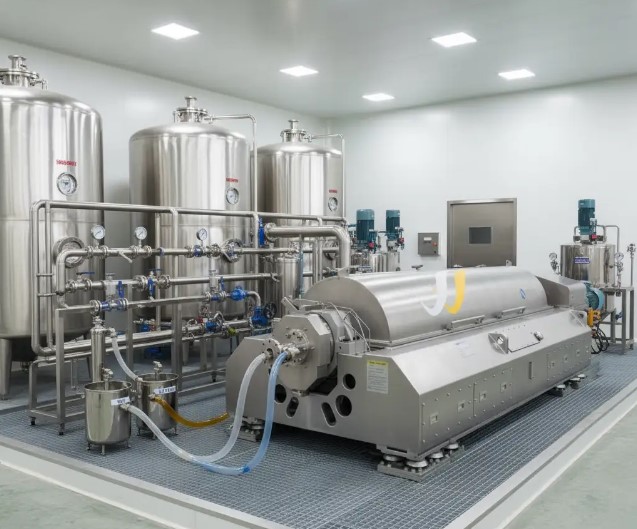
When evaluating a Centrifuge Machine Manufacturer, start by discussing your application in detail rather than focusing only on machine capacity. A reliable supplier should understand your feed material, required separation results, operating conditions, and production volume. Shenzhou Machinery, for example, provides centrifuge equipment for different industrial separation requirements and can help buyers assess suitable configurations.
What Material Will the Centrifuge Process?
The feed material plays a major role in centrifuge selection. Ask the manufacturer whether the equipment suits your specific material and its physical characteristics.
Provide details such as:
- Solid concentration
- Particle size distribution
- Liquid viscosity
- Temperature
- Density differences
- Corrosive or abrasive properties
- Expected feed rate
A manufacturer that asks detailed questions about your process demonstrates a stronger understanding of application-specific equipment selection.
What Separation Performance Can You Expect?
Do not rely only on general claims about separation efficiency. Ask for realistic performance expectations based on your actual material and operating conditions.
Important questions include:
- What separation efficiency can the machine achieve?
- What residual moisture or solids content should you expect?
- What liquid clarity can the equipment provide?
- What factors could affect separation results?
- Has the manufacturer handled similar applications?
These answers help you determine whether the proposed centrifuge can meet your production requirements.
What Capacity Does the Machine Support?
Capacity affects both equipment selection and production planning. Ask about the recommended feed capacity under your specific operating conditions.
Manufacturers may provide a maximum theoretical capacity, but actual throughput can vary depending on material characteristics and separation targets. Request capacity information that reflects your application rather than relying solely on a catalog figure.
Also ask whether the machine can handle future increases in production. Selecting equipment with an appropriate operating range can give your facility greater flexibility.
Which Centrifuge Configuration Do You Recommend?
Different industrial processes require different centrifuge designs and configurations. Ask the manufacturer why a particular model suits your application.
Discuss factors such as:
- Centrifugal force requirements
- Bowl or rotor configuration
- Discharge method
- Feed system
- Wear protection
- Automation requirements
- Installation environment
A professional supplier should explain the reasoning behind its recommendation instead of simply suggesting the largest available model.
What Materials and Components Does the Machine Use?
Construction materials influence equipment durability, maintenance requirements, and compatibility with the process material.
Ask which materials the manufacturer uses for components exposed to the feed, solids, and liquids. For demanding applications, discuss corrosion resistance, abrasion resistance, and component lifespan.
You should also ask about critical components such as bearings, motors, seals, gearboxes, and wear parts. Understanding their specifications can help you evaluate long-term operating costs.
What Maintenance Does the Equipment Require?
Maintenance requirements can significantly affect the total cost of ownership. Before ordering, ask how frequently technicians need to inspect, lubricate, adjust, or replace important components.
Request information about:
- Routine inspection intervals
- Lubrication requirements
- Wear-part replacement
- Recommended spare parts
- Cleaning procedures
- Preventive maintenance schedules
Shenzhou Machinery can also provide useful guidance about operating and maintaining centrifuge equipment according to the selected application and configuration.
What Safety Features Are Included?
Industrial centrifuges operate at high rotational speeds, so safety deserves careful attention. Ask the manufacturer about the machine’s safety systems and protective features.
Questions may cover emergency stops, protective enclosures, imbalance monitoring, vibration monitoring, overload protection, and access controls.
Also confirm what safety requirements apply during installation, operation, inspection, and maintenance.
What Installation Requirements Should You Prepare?
Before delivery, make sure your facility can accommodate the equipment. Ask the manufacturer for complete installation requirements.
These may include:
- Equipment dimensions
- Weight and lifting requirements
- Foundation specifications
- Electrical requirements
- Feed and discharge connections
- Drainage requirements
- Ventilation considerations
- Required clearance for maintenance
Obtaining this information early can prevent installation delays after the machine arrives.
Can the Manufacturer Provide Testing or Sample Trials?
Testing can provide valuable evidence before a major equipment purchase. Ask whether the manufacturer offers material testing or sample trials using your process feed.
A trial can help evaluate separation performance, throughput, moisture levels, and operating conditions. It may also reveal whether adjustments to the equipment configuration could improve results.
For specialized industrial applications, testing can provide more useful information than relying on standard catalog specifications alone.
What After-Sales Support Is Available?
The relationship with a manufacturer does not end when the equipment ships. Ask what technical support the supplier provides after installation.
Important areas include commissioning assistance, operator training, troubleshooting, maintenance guidance, spare parts availability, and technical consultation.
A manufacturer with accessible support can make equipment ownership easier, particularly when your production process depends on continuous operation.
What Is Included in the Quotation?
Price comparisons can become confusing when suppliers include different components and services in their quotations. Ask for a detailed breakdown of what the quoted price covers.
Confirm whether the quotation includes the main machine, control system, motors, accessories, spare parts, testing, packaging, installation support, and documentation.
You should also ask about shipping terms, warranty coverage, taxes, and any additional costs that could arise during installation.
What Warranty Does the Equipment Carry?
Warranty terms provide important protection for a significant equipment investment. Ask exactly what the warranty covers and how long it lasts.
Clarify whether the warranty applies to the complete machine or only selected components. Also ask about exclusions, service procedures, replacement parts, and the buyer’s responsibilities during the warranty period.
Review these conditions carefully before signing the purchase agreement.
Can You Provide References for Similar Applications?
Experience with similar processes can help you assess a manufacturer’s capabilities. Ask whether the supplier has delivered comparable centrifuges for applications involving similar materials, capacity, and separation requirements.
Where appropriate, request case studies, performance information, or customer references. This can give you a better understanding of how the equipment performs under real operating conditions.
Final Questions to Ask Before Ordering
Before making your final decision, review the manufacturer’s answers and compare them against your project requirements. A strong supplier should provide clear technical information rather than vague promises.
Create a checklist covering:
- Process material and operating conditions
- Required capacity and separation performance
- Recommended centrifuge configuration
- Construction materials and critical components
- Maintenance and spare parts
- Safety and installation requirements
- Testing and commissioning support
- Warranty and after-sales service
- Complete quotation and delivery terms
- Experience with similar applications
Taking time to ask these questions can help you choose equipment that fits your process and supports dependable long-term operation. Shenzhou Machinery offers centrifuge solutions for various industrial separation needs, making detailed technical discussions an important part of evaluating the right equipment for your project.