
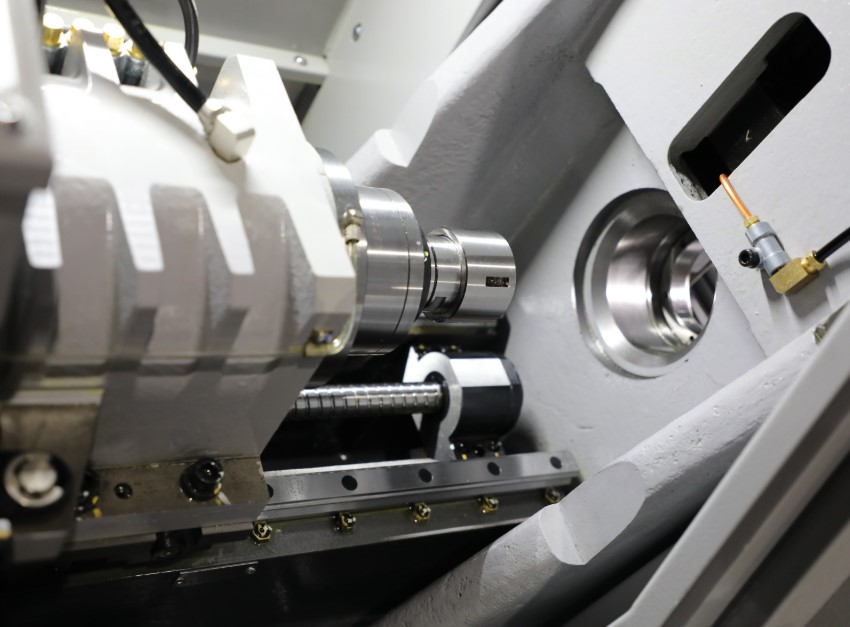
Tooling plays a major role in the performance of an automatic Swiss lathe. The right tooling setup helps manufacturers machine complex features accurately while maintaining stable cycle times. It also affects surface finish, tool life, and the machine’s ability to handle different materials.
When evaluating a swiss type automatic lathe machine, look beyond spindle speed and axis count. Examine the available turning tools, live tooling, drilling systems, threading tools, cutoff tools, and holders. A well-matched tooling configuration can improve productivity without adding unnecessary operations.
Why Tooling Matters In Swiss-Type Machining
Swiss-type machining often involves small components with tight dimensional requirements. The machine needs tools that provide stable cutting performance while working within a compact machining area.
Good tooling also supports multiple operations in one cycle. This approach reduces workpiece handling and helps manufacturers avoid unnecessary secondary machining.
The ideal tooling package depends on the part design, material, tolerances, production volume, and required surface finish.
Turning Tool Options
Turning tools handle many of the primary cutting operations on Swiss machines. They can support external diameters, shoulders, grooves, and other profiles.
Manufacturers should check whether the machine accepts different insert geometries and holder configurations. This flexibility allows operators to select tooling according to the workpiece material and cutting conditions.
Tool holders with reliable positioning also help maintain repeatable dimensions during long production runs.
Grooving Tools
Grooving tools create narrow channels, reliefs, and other recessed features. Small parts often require precise grooves for assembly or functional purposes.
A suitable grooving system should provide adequate rigidity and clearance. The tool also needs to match the groove width and depth required by the component.
Live Tooling For Milling Operations
Live tooling expands the capabilities of a Swiss automatic lathe by allowing rotating tools to perform operations on the workpiece.
Depending on the machine configuration, live tools can handle features such as:
- Cross holes
- Slots
- Flats
- Keyways
- Small milled profiles
- Radial drilling
This capability helps reduce the need to move parts to another machine. It also improves feature alignment because several operations can occur within the same machining cycle.
Drilling And Boring Tools
Drilling tools play an important role when components require axial or cross holes. Swiss machines often process small workpieces where accurate hole positioning matters.
Manufacturers should consider tool diameter, holder design, coolant delivery, and available working space when selecting drilling tools.
Boring tools provide another option for improving the accuracy of existing holes. They can help control internal diameters and improve the finish of critical internal surfaces.
Micro-Drilling Considerations
Small components may require very small drill diameters. Micro-drilling demands careful attention to tool rigidity, spindle speed, chip evacuation, and coolant application.
The tooling system should provide enough stability to reduce deflection and minimize the risk of tool breakage.
Threading Tooling
Threaded features often appear on precision components. Threading tools need to match the required thread profile, pitch, diameter, and material.
External threading tools can produce threads on shafts and other outside surfaces. Internal threading tools support threaded holes and internal features.
For high-volume production, consistent tool positioning and predictable insert performance help maintain thread quality from one part to the next.
Parting And Cutoff Tools
Parting tools separate finished components from bar stock. Their performance directly affects cycle time and the condition of the finished part.
A rigid cutoff setup helps reduce vibration and improves cutting stability. Tool geometry should also match the material and bar diameter.
Manufacturers should check how easily the machine accommodates cutoff tooling and whether the setup provides sufficient clearance around the workpiece.
Tool Holders And Tool Stations
Tool holders provide the connection between cutting tools and the machine. Their rigidity, positioning accuracy, and compatibility with the machine directly influence machining performance.
A machine with flexible tool stations gives manufacturers more freedom to combine different operations. This becomes especially useful when producing parts with several turned, drilled, milled, and threaded features.
JSWAY designs CNC machining solutions with configurations intended to support complex precision production. Manufacturers should still match the tooling arrangement to their specific part requirements before choosing a machine.
Coolant Delivery And Tooling Performance
Tooling performance does not depend only on the cutting edge. Coolant delivery also affects cutting temperature, chip evacuation, and tool life.
Through-tool or targeted coolant options may provide advantages for certain drilling and machining applications. The appropriate solution depends on the material, cutting conditions, and tool design.
Good coolant access can become especially important during continuous production where heat and chips could affect machining stability.
Tooling For Different Materials
Different materials require different tool grades, geometries, and cutting conditions. Aluminum, stainless steel, brass, titanium, and other materials do not respond identically to the same tooling setup.
When evaluating tooling options, consider:
- Material hardness and machinability
- Required surface finish
- Cutting speed
- Chip control
- Tool wear
- Production volume
Selecting tooling around the actual material helps manufacturers maintain predictable performance and avoid premature tool replacement.
Tool Life And Production Efficiency
Tool life has a direct effect on production efficiency. Frequent tool changes increase interruptions and may affect cycle consistency.
Manufacturers should evaluate insert life under realistic production conditions rather than relying only on theoretical specifications.
A good tooling strategy balances cutting performance with tool longevity. The fastest cutting tool does not always provide the lowest overall production cost.
Tooling Flexibility For Complex Parts
Modern precision components may combine turning, drilling, milling, threading, and grooving within one small workpiece. A flexible tooling system allows more of these features to fit into a single machining process.
This flexibility becomes valuable when part designs change frequently. It also helps manufacturers handle different component families without completely redesigning the machine setup.
Before purchasing equipment, review the maximum number of tool positions, live tooling availability, tool sizes, holder compatibility, and clearance around each station.
What Should You Check Before Choosing Tooling?
A practical tooling evaluation should focus on the actual parts you plan to manufacture. Start with the component drawing and identify every machining operation.
Then review whether the machine and tooling system can support those operations without unnecessary workholding changes.
Key questions include:
- How many tools can the machine accommodate?
- Does it support live tooling?
- Which drilling and boring tools fit the configuration?
- What threading and grooving options can it handle?
- How easily can tools be changed and adjusted?
- Does the coolant system support the required cutting operations?
- Can the tooling handle the materials used in production?
These questions help manufacturers avoid selecting a machine based only on general specifications.
How JSWAY Approaches Tooling Requirements
Tooling selection should always connect directly to the intended production process. A machine with advanced capabilities may not deliver the expected results when its tooling configuration does not match the workpiece.
JSWAY offers Swiss-type CNC machining solutions for manufacturers working with precision components and demanding production requirements. Reviewing tooling capacity, machine configuration, and part specifications together can help create a more reliable machining setup.
Final Thoughts
The best tooling options for a Swiss automatic lathe depend on the parts, materials, tolerances, and production goals. Turning tools provide the foundation, while live tooling, drilling, boring, threading, grooving, and cutoff tools expand machining capabilities.
Manufacturers should evaluate the complete tooling system before purchasing equipment. Looking at tool stations, holders, coolant delivery, tool life, and material compatibility can help ensure the machine supports efficient and repeatable production.