
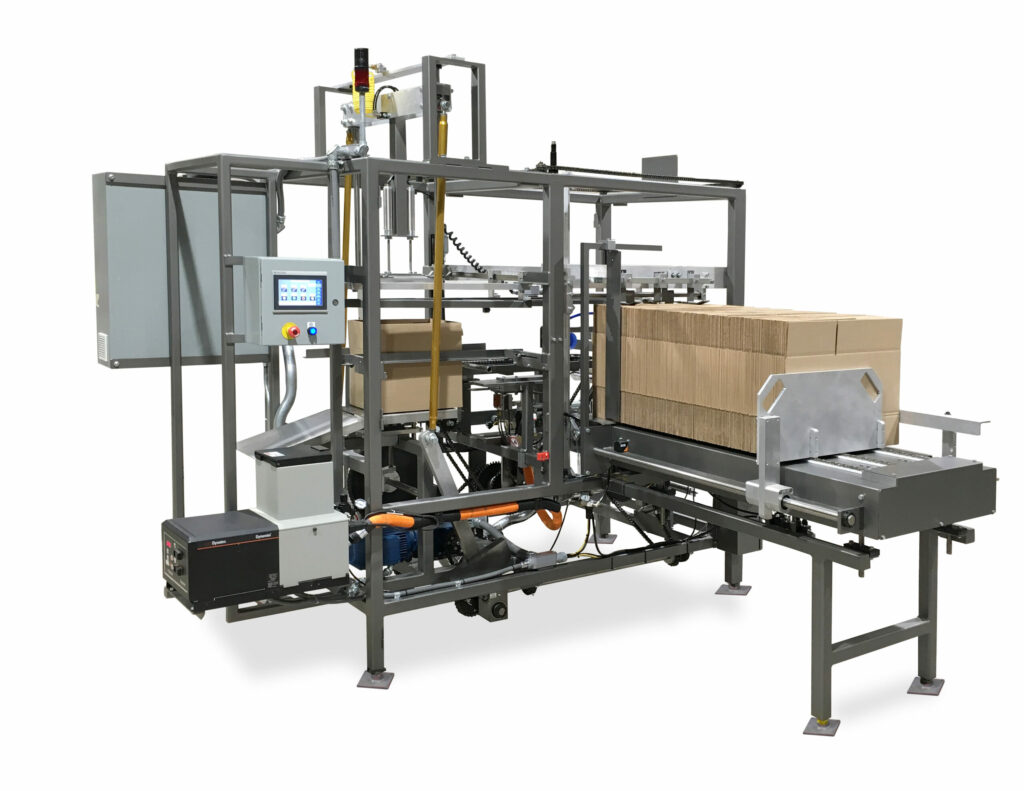
Installing packaging equipment is only the beginning of creating a reliable automated process. Proper setup is equally important because machine adjustments can influence carton handling, forming accuracy, production stability, and the interaction between the equipment and the rest of the packaging line.
A Case Erector Machine needs to be configured according to the carton dimensions, board characteristics, and production requirements before regular operation begins. Correct positioning and adjustment allow the machine to handle carton blanks consistently and reduce avoidable operating problems.
Start With the Carton Specifications
Before adjusting the equipment, operators should understand the cartons that will be used during production. Dimensions, board thickness, flap configuration, and blank construction can all affect machine settings.
Using accurate carton specifications provides a starting point for positioning guides, forming components, and other mechanisms involved in the case-forming cycle.
Check the Machine Position
The machine should be installed on a suitable, stable surface with enough surrounding space for operation and maintenance. Its position should also correspond with the layout of connected equipment.
A poorly positioned machine can create alignment problems when cases transfer to conveyors, fillers, sealers, or other downstream systems.
Adjust Carton Guides Carefully
Guides help keep carton blanks in the correct position as they move through the forming process. If they are too loose, cartons may shift or become misaligned. If they are too tight, they can interfere with smooth movement.
Guide adjustments should therefore provide sufficient control without restricting the carton unnecessarily.
Configure the Carton Magazine
The carton magazine holds flat blanks before they enter the forming cycle. Its position and configuration should match the dimensions and construction of the cartons being processed.
Cartons should be loaded correctly and positioned so that blanks can be picked consistently. Improper loading can contribute to feeding interruptions and inconsistent machine cycles.
Verify Suction and Blank Feeding
Many automated case formers use suction or similar mechanisms to separate and handle carton blanks. These systems need to be adjusted according to the material and blank characteristics.
During setup, operators should verify that blanks are being picked cleanly without multiple sheets being drawn into the forming area at the same time.
Set Folding and Forming Components
Folding components need to align with the carton fold lines. Their position can influence how accurately the case is squared and how smoothly the bottom flaps move into place.
Correct adjustment helps the machine follow the intended carton geometry instead of forcing the material into position.
Check Bottom Sealing
If the machine includes an automatic bottom-sealing system, its settings should be checked during commissioning. The sealing mechanism needs to contact the correct carton surfaces and provide a secure closure.
The type of sealing material, carton construction, and required case dimensions can all influence the appropriate configuration.
Test the Machine at a Controlled Speed
Initial testing should not necessarily begin at maximum production speed. Running a controlled number of cartons first allows operators to observe the complete forming cycle.
This makes it easier to identify issues such as poor opening, flap interference, carton skewing, or incomplete sealing before increasing the operating rate.
Inspect Formed Cases
A properly set machine should produce cases that are consistently opened, squared, folded, and sealed according to the required specifications.
During setup, operators should inspect multiple cases rather than relying on a single successful cycle. Repeated testing provides a better indication of whether the configuration is stable.
Coordinate With Downstream Equipment
The case erector’s setup should also account for what happens after the carton is formed. The discharge position, case orientation, and production rate need to be compatible with conveyors and downstream machinery.
If the receiving equipment operates at a different pace or expects cases in a specific position, adjustments may be necessary to maintain a continuous flow.
Use a Structured Startup Checklist
A setup checklist can make commissioning more consistent. It may include:
- Confirming carton dimensions
- Checking machine alignment
- Adjusting carton guides
- Inspecting the blank magazine
- Verifying feeding and suction
- Setting folding components
- Checking bottom sealing
- Testing sensors and safety devices
- Running sample cartons
- Confirming downstream transfer
A documented procedure can also make future changeovers easier for operators and maintenance personnel.
Monitor the First Production Run
Even after successful testing, the first full production run should be monitored carefully. Changes in carton batches, operating speed, or environmental conditions can sometimes reveal issues that were not apparent during initial setup.
Early observation allows operators to make small corrections before they develop into recurring production problems.
The Role of Techflow Pack
Manufacturers should consider setup requirements when selecting and installing packaging equipment rather than focusing only on rated production speed. Clear adjustment procedures, accessible components, and suitable machine configuration can all contribute to easier commissioning.
Techflow Pack is one example of a packaging equipment provider that can be considered when evaluating case-forming solutions and their integration into a broader production environment.
Maintaining the Original Setup
Proper setup is not a one-time concern. Machine settings should be checked periodically, particularly after maintenance, carton-size changes, component replacement, or extended periods of operation.
Keeping a record of proven settings for different carton formats can help operators return the machine to a reliable configuration during future changeovers.
Why Setup Matters for Long-Term Performance
A well-configured case erector can provide more predictable carton handling and reduce unnecessary interruptions. In contrast, incorrect settings can contribute to damaged cartons, feeding problems, poor sealing, and additional operator intervention.
Taking time to establish the correct configuration creates a stronger foundation for efficient packaging operations. Proper setup therefore plays an important role in achieving consistent case forming and dependable production performance.