

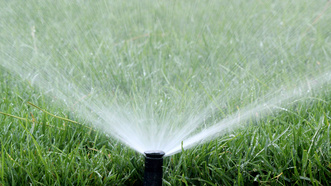
Agriculture faces increasing pressure to produce more food while managing limited water resources. Changing rainfall patterns, rising temperatures, population growth, and competition for freshwater have made efficient irrigation an important part of modern farming. Reliable irrigation infrastructure helps farmers transport water where it is needed, reduce avoidable losses, and maintain more consistent growing conditions throughout the season.
An experienced Irrigation Pipe Manufacturer contributes to these goals by producing piping solutions designed for different agricultural environments, flow requirements, and operating pressures. From small farms to large commercial operations, suitable irrigation pipes help create dependable water distribution networks. Their effectiveness depends on appropriate material selection, correct system design, product quality, and proper installation.
Why Agricultural Water Demand Is Increasing
Agricultural water demand varies by region, crop type, climate, soil conditions, and farming practices. In areas experiencing irregular rainfall or prolonged dry periods, farmers may need to rely more heavily on irrigation to protect crops and maintain production.
Expanding cultivation, greenhouse farming, and commercial horticulture can also increase the need for reliable water delivery. At the same time, groundwater depletion and restrictions on water withdrawals are encouraging agricultural businesses to make better use of available supplies.
Meeting these challenges requires more than increasing the amount of water delivered to fields. Farmers also need systems that distribute water efficiently, limit unnecessary losses, and match irrigation volumes to crop requirements.
Well-designed piping networks provide the infrastructure needed to move water from a source to the appropriate irrigation equipment.
The Role of Irrigation Pipes in Efficient Water Distribution
Irrigation pipes form the connection between water sources, pumps, storage tanks, filtration equipment, and field distribution systems. Their design and condition influence how reliably water reaches different areas of a farm.
Compared with poorly maintained or unsuitable distribution arrangements, properly selected piping can help reduce leakage and support more controlled water delivery. It can also make it easier to distribute water across larger fields or to multiple growing zones.
The right pipe dimensions are especially important. Pipes that are too small for the required flow can create excessive friction losses and reduce pressure at downstream outlets. Correctly sized pipes help maintain the hydraulic conditions needed by sprinklers, drip irrigation lines, and other application equipment.
Manufacturers support this process by providing products with defined dimensions, material properties, and pressure ratings that can be matched to system requirements.
Developing Pipes for Different Agricultural Applications
Agricultural operations have different water distribution needs. A small vegetable farm may require a relatively simple network, while a large commercial farm may need multiple irrigation zones, pumping stations, and long distribution lines.
Pipe manufacturers produce options for a range of applications, including:
- Open-field irrigation: Distribution networks that transport water across cultivated areas.
- Drip irrigation systems: Pipes and tubing that deliver water to crops through emitters or connected drip lines.
- Sprinkler irrigation: Piping designed to supply water at the pressure and flow rates required by sprinkler equipment.
- Greenhouses and nurseries: Systems that support controlled irrigation in protected growing environments.
- Orchards and plantations: Distribution networks that serve trees and crops spread across larger areas.
Each application requires careful consideration of flow rate, operating pressure, installation conditions, and compatibility with fittings and other system components.
Selecting pipes according to these factors helps agricultural businesses build systems suited to their actual water distribution needs.
Choosing Materials for Reliable Irrigation Systems
Material selection affects pipe durability, installation requirements, maintenance needs, and long-term performance. PVC and HDPE are commonly used in agricultural irrigation, although their suitability depends on the intended application and product specifications.
PVC pipes are often selected for fixed distribution networks where rigid piping and dimensional stability are useful. HDPE pipes offer flexibility that can be beneficial when installations involve uneven terrain, changes in direction, or particular handling requirements.
Neither material is automatically the best choice for every farm. Buyers should evaluate the operating pressure, temperature conditions, exposure to sunlight, installation method, and expected service life.
Manufacturers can help buyers understand available material options and technical specifications. The final selection should be based on documented performance requirements rather than material names alone.
Supporting Water Conservation Through Better System Design
Reducing water waste is an important part of meeting growing agricultural demand. However, pipes alone cannot determine how much water crops ultimately receive or how efficiently that water is used.
A well-designed irrigation network can support conservation by reducing leaks, maintaining suitable pressure, and distributing water consistently. When combined with appropriate irrigation methods, it can help farmers apply water more precisely.
For example, drip irrigation delivers water near the plant root zone, which can reduce evaporation and unnecessary wetting compared with some other irrigation methods. Its performance still depends on emitter selection, filtration, system maintenance, and correct scheduling.
Reliable pipes support these systems by transporting water to the required locations under suitable operating conditions.
Farmers can further improve efficiency by monitoring soil moisture, adjusting irrigation schedules to crop needs, and inspecting the network regularly for leaks or blockages.
The Importance of Pressure Ratings and Flow Capacity
Water distribution systems must operate within the performance limits of their components. Pipe pressure ratings indicate the pressure a product is designed to withstand under specified conditions, while flow capacity depends on factors such as internal diameter, flow velocity, and system layout.
If pipes are undersized or unsuitable for the operating pressure, the network may experience poor performance, leakage, or premature failure. Pressure surges caused by pump starts, valve closures, and other operating changes can also place additional stress on the system.
Manufacturers provide technical information that helps engineers and buyers choose products for the required operating conditions. System designers should consider normal operating pressure as well as potential surges and other site-specific factors.
Appropriate pipe selection, pressure regulation, and correctly installed fittings help support reliable water delivery across the irrigation network.
Improving Durability and Reducing Maintenance
A dependable irrigation network can help farms avoid interruptions during important growing periods. Pipe damage or leaks may reduce water availability, increase repair costs, and require additional labor.
Manufacturers contribute to durability by maintaining consistent product dimensions, selecting appropriate materials, and applying quality-control procedures during production.
However, actual service life also depends on installation and operating conditions. Pipes may be affected by ultraviolet exposure, unsuitable burial practices, excessive pressure, physical impacts, or incompatible fittings.
Farmers can protect their investment by following installation guidelines, providing suitable support and protection, inspecting connections, and addressing leaks promptly.
Regular maintenance is particularly important before peak irrigation periods, when unexpected system failures can have a greater effect on crop management.
Adapting to Different Farm Sizes and Water Sources
Agricultural water distribution systems vary significantly depending on the source and scale of the operation. Some farms draw water from wells, while others use reservoirs, canals, rainwater storage, or managed surface-water supplies.
Each source presents different considerations. Groundwater systems may require pumps and pressure controls, while surface-water sources may need filtration to remove suspended particles. Water quality can also affect the selection of filters, fittings, valves, and other components.
Small farms may benefit from straightforward networks that are easy to maintain. Larger operations may require separate irrigation zones, automated valves, and more complex pressure management.
Manufacturers support these varied needs by offering different pipe sizes, material types, and pressure classes. Careful coordination with irrigation designers ensures that the selected products suit the water source, farm layout, and intended irrigation method.
How Manufacturing Quality Supports Agricultural Productivity
Manufacturing quality plays an important role in the reliability of agricultural water systems. Pipes with inconsistent dimensions or inadequate material properties may create installation difficulties or fail to perform as expected.
Quality-control practices can include dimensional checks, visual inspections, material verification, and pressure-related testing where applicable. Product documentation helps buyers confirm whether a pipe is suitable for the intended system.
Consistency is particularly important for large projects that require substantial quantities of pipe. Uniform dimensions and clearly defined specifications can simplify installation and improve compatibility with fittings and connected equipment.
Buyers should review relevant technical data and applicable standards before purchasing. They should also ensure that the selected product meets project requirements rather than assuming all pipes of a particular material have equivalent performance.
The Value of Planning Irrigation Pipe Purchases
Meeting agricultural water demand often requires investment in both infrastructure and ongoing maintenance. Purchasing decisions should therefore account for the full operating life of the system rather than focusing only on the initial pipe price.
Before selecting products, farmers and project managers should identify the required flow rate, operating pressure, pipe route, installation method, and expected expansion needs.
They should also consider availability of fittings, replacement components, technical support, and delivery schedules. For larger projects, checking product specifications and quantities before ordering can reduce delays and unnecessary material waste.
Comparing suppliers on quality, technical documentation, consistency, and total ownership cost helps buyers make decisions that support dependable operation.
Emerging Technologies in Agricultural Water Management
Technology is changing how farms monitor and control irrigation. Soil-moisture sensors, weather-based scheduling, automated valves, and remote monitoring tools can help farmers determine when and where water is needed.
These systems depend on reliable physical infrastructure. Sensors and controls can improve decision-making, but they cannot compensate for leaking pipes, unsuitable pressure conditions, or poorly designed distribution networks.
Manufacturers that understand modern irrigation requirements can help buyers identify piping products compatible with evolving system designs. Coordination between pipe selection, hydraulic planning, filtration, and automation is essential for achieving dependable results.
As farms adopt more data-driven approaches, reliable distribution infrastructure will remain a fundamental part of efficient agricultural water management.
Conclusion
Irrigation pipe manufacturers help address growing agricultural water demands by supplying products that support reliable distribution, suitable pressure management, and efficient system design. Appropriate pipe materials, consistent manufacturing quality, and application-specific product selection can help farmers build irrigation networks that meet their operational needs.
Nevertheless, improving agricultural water efficiency requires a coordinated approach. Correct hydraulic design, suitable irrigation methods, routine maintenance, and responsible water scheduling are equally important.
By evaluating technical specifications and choosing pipes suited to their farms, agricultural businesses can strengthen water distribution infrastructure, reduce avoidable losses, and make better use of available water resources.