

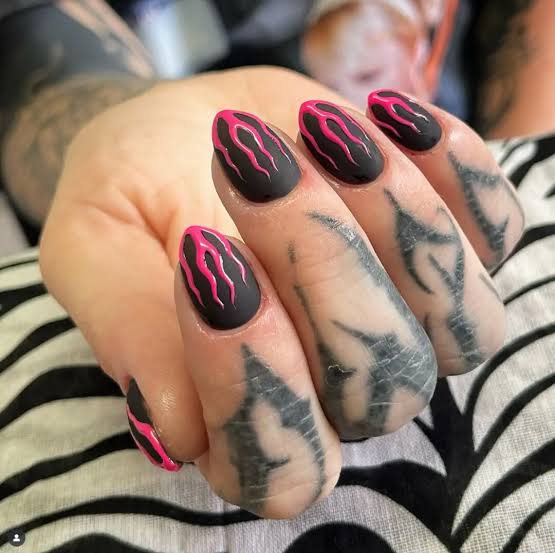
The gel polish market has become increasingly competitive. With countless colors, finishes, formulas, and brands available, customers have plenty of choices when deciding which products deserve a place in their nail kit. For beauty brands, simply offering attractive colors is no longer enough. Product quality, application experience, durability, consistency, and presentation all influence whether customers become repeat buyers.
High-quality Custom Gel Polish stands out because it combines several important characteristics into one reliable product. A beautiful shade may attract attention initially, but a smooth formula, dependable curing, long-lasting finish, comfortable application, and consistent performance are what help build customer trust. For brands developing their own collection, understanding these qualities is essential before moving from product concepts to full-scale production.
Consistent Formula Performance
One of the clearest differences between an average gel polish and a high-quality product is consistency.
The formula should perform predictably from one application to another. Nail technicians should not have to adjust their technique every time they use a particular shade.
Consistency involves several characteristics, including:
- Viscosity
- Pigmentation
- Coverage
- Application smoothness
- Curing behavior
- Finish
- Wear performance
A formula that behaves consistently makes the product easier to use and gives customers more confidence in the brand.
Smooth and Controlled Application
Application quality matters greatly in professional nail services.
A good gel polish should spread smoothly across the nail without becoming difficult to control. It should provide enough working time for the technician to create an even layer without excessive pooling around the cuticle.
If a formula is too thick, it may create uneven coverage or require excessive brushing. If it is too thin, it may run before curing.
The ideal consistency depends partly on the intended product and market, but controlled application should always be a priority.
Strong Pigmentation
Pigmentation has a direct effect on the customer’s experience.
A highly pigmented gel polish can often provide better coverage with fewer coats. This can save application time and reduce product usage.
However, strong pigmentation must be balanced with proper formulation. A heavily pigmented product that does not cure correctly or applies unevenly is not necessarily a high-quality product.
The goal is to achieve an effective balance between:
- Color intensity
- Coverage
- Application
- Layer thickness
- Curing performance
This is particularly important for dark shades, white formulas, pastels, and highly saturated colors.
Accurate and Attractive Colors
Color is one of the main reasons customers purchase gel polish.
A shade should look appealing in the bottle and produce a similar result when applied correctly. Brands should therefore evaluate colors on actual nails rather than relying entirely on digital color samples.
Lighting can also change how colors appear. A shade that looks slightly warm under one light source may appear cooler under another.
For this reason, professional product development often involves repeated color sampling and comparison until the desired result is achieved.
Reliable Curing
Proper curing is an essential part of gel polish performance.
A product should be formulated with appropriate curing characteristics for its intended system and recommended lamp. Brands should provide clear usage instructions rather than assuming that every lamp and application method will produce identical results.
During product testing, pay attention to:
- Recommended curing time
- Layer thickness
- Lamp compatibility
- Surface finish after curing
- Potential wrinkling
- Incomplete curing
- Heat sensation
Manufacturers and brands should work together to establish appropriate application and curing guidance.
Good Wear Performance
Customers expect gel polish to remain attractive after application.
Wear performance can depend on several factors, including the formula, nail preparation, application technique, base coat, top coat, curing, and everyday activities.
A high-quality product should be designed with durability in mind while still providing a practical removal process.
Testing should examine how the product behaves over time rather than judging it immediately after curing.
A Balanced Removal Experience
Long wear is valuable, but customers do not want removal to become unnecessarily difficult.
A well-designed gel polish system should balance adhesion and removability.
If the product lifts too easily, customers may question its durability. If it becomes excessively difficult to remove, professional nail technicians may find it inconvenient and clients may have a poor experience.
This is why the complete system—including preparation products, base coat, color, and top coat—should be evaluated together.
A Quality Brush Matters
The brush may seem like a small detail, but it can have a major impact on application.
A well-designed brush should allow users to control the amount of product and reach areas close to the cuticle without making application unnecessarily difficult.
Important brush characteristics include:
- Shape
- Flexibility
- Bristle consistency
- Product pickup
- Edge control
- Durability
Even an excellent formula can become frustrating if the brush is poorly designed.
Good Bottle Design
Bottle quality contributes to both usability and product protection.
A suitable bottle should close securely and help prevent unnecessary exposure to light or air, depending on the formula’s requirements.
The bottle should also be stable on a work surface and comfortable to handle.
For professional salons, consistent bottle dimensions can make storage and organization easier.
Shade-to-Shade Consistency
Quality control becomes especially important when a brand offers a large collection.
Customers expect a particular shade to remain recognizable when they purchase it again. If the same product number produces significantly different colors between production batches, customer confidence can quickly decline.
Manufacturers should therefore maintain appropriate controls over raw materials, pigment levels, mixing procedures, filling, and finished-product inspection.
Batch consistency is not simply a manufacturing issue. It is a major part of the customer experience.
Quality Raw Materials
The ingredients used in a gel polish formula have an important role in its overall performance.
Brands should work with manufacturers that maintain appropriate standards for raw-material sourcing, storage, handling, and quality control.
The objective is not simply to select the cheapest available ingredients. Instead, manufacturers need to formulate products that meet the desired performance, stability, safety, and regulatory requirements.
Reliable raw-material sourcing also helps manufacturers maintain greater consistency between production batches.
Proper Stability Testing
A product may perform well when it is freshly produced but behave differently after storage.
Stability evaluation helps manufacturers understand how the formula responds to factors such as time, temperature, and storage conditions.
Testing may examine changes in:
- Color
- Texture
- Viscosity
- Separation
- Odor
- Packaging interaction
- Overall appearance
This information is valuable because beauty products may spend weeks or months moving through manufacturing, shipping, warehousing, retail, and customer storage.
Professional Testing Makes a Difference
Laboratory evaluation is important, but practical testing can provide another layer of useful information.
Professional nail technicians can identify application problems that may not be obvious during basic product evaluation.
They can comment on whether the polish:
- Levels properly
- Provides adequate coverage
- Works well near the cuticle
- Cures as expected
- Performs under salon conditions
- Works well with other products
- Removes efficiently
This real-world feedback can help brands refine formulas before launch.
Attractive Finish
A high-quality gel polish should create the finish promised by the product.
For a standard glossy shade, customers generally expect a smooth, even surface after proper curing and top-coat application.
Special finishes require additional attention.
For example, glitter, shimmer, metallic, cat-eye, chrome-effect, or reflective products may need specialized formulation and application instructions to produce the intended visual effect.
The final appearance should match the brand’s product photography and marketing claims as closely as practical.
Packaging Should Match Product Quality
Customers judge products visually before they use them.
If a brand invests heavily in formula development but uses poor-quality bottles, messy labels, or inconsistent packaging, customers may question the product before giving it a chance.
Professional packaging should provide:
- Clear product information
- Easy shade identification
- Secure product protection
- Consistent branding
- Readable labels
- Appropriate regulatory information
The packaging does not need to be extravagant. It needs to be well designed and appropriate for the brand’s market position.
Clear Product Information
Quality also involves communication.
Customers should be able to understand how to use the product correctly.
Depending on the market and product, information may include:
- Application instructions
- Curing recommendations
- Removal guidance
- Ingredient information
- Warnings
- Storage recommendations
- Net quantity
- Batch details
Clear instructions can reduce misuse and help customers achieve better results.
Reliable Manufacturing Processes
A great formula can still fail commercially if production is inconsistent.
Manufacturing quality depends on more than the formula itself. Mixing, filling, packaging, labeling, inspection, and storage all have an effect on the final product.
Brands should ask potential manufacturing partners about their quality-control procedures before placing large orders.
Useful questions include:
- How are batches inspected?
- How is color consistency maintained?
- How are raw materials checked?
- What testing is performed?
- How are finished products stored?
- How are packaging defects handled?
- Can samples be reviewed before mass production?
The answers can help a brand evaluate whether a manufacturer is capable of maintaining its standards as production volumes increase.
Strong Brand-Market Fit
Quality is not exactly the same for every target market.
A professional salon brand may prioritize application speed, coverage, durability, and easy shade identification. A consumer-focused fashion brand may place greater emphasis on color trends, special effects, packaging, and social-media appeal.
Therefore, brands should define their quality standards based on their actual customers.
Before developing products, identify what your audience values most.
For example:
Professional salon audience:
Application efficiency, consistency, durability, coverage, and reliable curing.
Fashion-focused audience:
Unique colors, finishes, packaging, trend relevance, and visual appeal.
Beginner audience:
Easy application, manageable consistency, clear instructions, and forgiving formulas.
Knowing the customer makes product development much more focused.
Quality Control Should Continue After Launch
Product development does not end when the first collection reaches customers.
Brands should monitor reviews, complaints, returns, and professional feedback.
Pay attention to repeated comments about:
- Particular shades
- Brush performance
- Packaging
- Application
- Curing
- Wear
- Removal
If multiple customers report the same issue, investigate it rather than treating each complaint as an isolated incident.
This feedback can help improve future production batches and new collections.
Avoid Choosing Quality Based Only on Price
Price is important when developing a beauty product, but it should not be the only deciding factor.
A low manufacturing price may seem attractive initially. However, poor consistency, packaging problems, weak performance, or high return rates can cost much more over time.
Instead, evaluate the overall value of the manufacturing relationship.
Consider:
- Product quality
- Sample performance
- Communication
- Manufacturing capabilities
- Quality-control systems
- Production capacity
- Packaging options
- Lead times
- Documentation
- Long-term reliability
The cheapest option is not always the most economical choice.
Test Before Scaling
One of the safest approaches for a new gel polish brand is to test before committing to large production quantities.
Begin with samples and evaluate them carefully. Refine the formula or colors where necessary. Test packaging. Gather professional feedback.
Once the product meets your standards, move toward larger production.
This approach may require more time initially, but it can reduce the risk of carrying large quantities of a product that does not perform as expected.
What Really Makes a Gel Polish Stand Out?
Ultimately, high-quality gel polish is not defined by one feature.
It is the combination of several elements working together:
Formula + color + application + curing + durability + packaging + consistency + quality control
A beautiful color with poor application will disappoint customers. A durable formula with unattractive packaging may struggle to gain attention. Excellent packaging cannot compensate for weak product performance.
The strongest brands understand that every part of the customer experience matters.
Final Thoughts
High-quality custom gel polish stands out because it delivers a reliable experience from the first application through repeated use. Customers notice when a formula applies smoothly, provides consistent color, cures properly, creates an attractive finish, and performs well over time.
For beauty brands, achieving that level of quality requires careful product development and a dependable manufacturing process. Testing samples, evaluating formulas, checking packaging, gathering professional feedback, and maintaining strict consistency can make a major difference.
The goal should not simply be to create another gel polish collection. It should be to create products that customers trust, nail technicians enjoy using, and retailers feel confident stocking. When product performance and brand presentation work together, a gel polish line has a much stronger foundation for long-term growth.